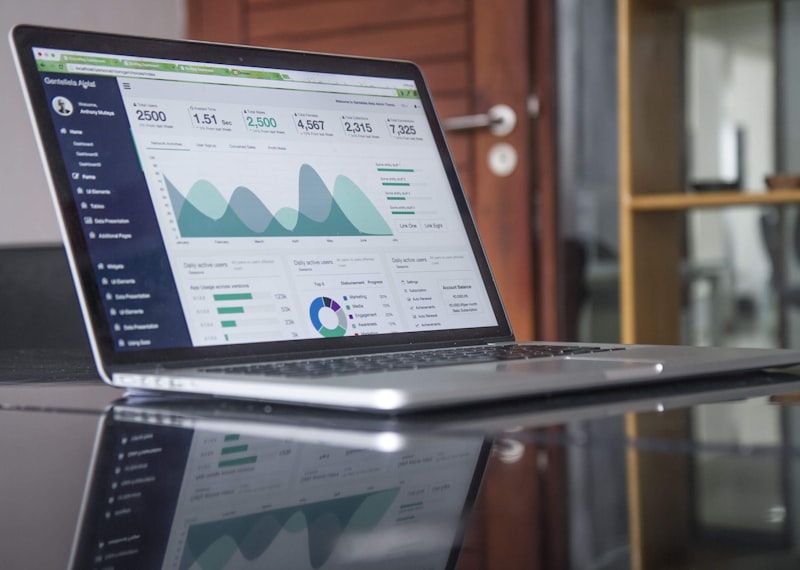
You're losing money every time a customer clicks on your coffee shop's website but doesn't make a purchase or visit your store. According to our analysis, a typical coffee shop website conversion rate is around 2% - 5%. That means out of every 100 visitors, only 2-5 make a purchase or take a desired action.
2%↓
Average Coffee Shop Website Conversion Rate
Source: DataLatte analysis
5%↑
Top 10% Conversion Rate
Source: Industry benchmarks
8%↑
Average Salon Website Conversion Rate
Source: DataLatte analysis
10%↑
Top 10% Conversion Rate
Source: Industry benchmarks
As a coffee shop owner, you need to optimize your website to turn online browsers into in-store visitors. But where do you start? In this article, we'll cover the essential steps to improve your website conversion rates and drive more sales for your coffee shop.
Step 1: Mobile Optimization
Most coffee shops have a significant portion of their customers who browse and order online on their mobile devices. Ensure that your website is mobile-friendly and responsive to provide a seamless user experience across various devices.
According to Google, 61% of users are more likely to return to a website that has a mobile-friendly design.
Mobile Optimization Impact on Conversion Rates
Poor Mobile Experience
5%
Average Mobile Experience
8%
Good Mobile Experience
12%
Excellent Mobile ExperienceBest
15%
Source: Google
Callout:
Pro Tip
Make sure to test your website on different devices and browsers to ensure a smooth user experience.
Step 2: Simplify Navigation and Calls-to-Action (CTAs)
Simplify your website's navigation and make it easy for visitors to find what they're looking for. Use clear and prominent CTAs to guide visitors towards taking the desired action.
For example, a coffee shop can add a prominent CTA on their homepage to encourage visitors to "Order Online" or "Book a Table".
Step 3: Use High-Quality Imagery and Videos
High-quality imagery and videos can help create an emotional connection with your customers and increase the chances of conversion.
Callout:
Real Example
Check out the website of The Coffee Bean & Tea Leaf, which features high-quality images of their menu items and store locations.
Step 4: Optimize for Local SEO
As a local business, it's essential to optimize your website for local SEO to attract more online visibility and drive foot traffic to your store.
Callout:
Watch Out
Don't forget to claim and optimize your Google My Business listing to improve your local SEO and online reputation.
Step 5: Use Analytics and Tracking
Use analytics and tracking tools to monitor your website's performance and identify areas for improvement.
For example, you can use Google Analytics to track your website's conversion rates, bounce rates, and average session duration.
Frequently Asked Questions
Q: What is the average website conversion rate for coffee shops?
A: The average website conversion rate for coffee shops is around 2% - 5%.
Q: Why is mobile optimization essential for coffee shops?
A: Mobile optimization is essential for coffee shops because most customers browse and order online on their mobile devices.
Q: How can I simplify my website's navigation and CTAs?
A: You can simplify your website's navigation and CTAs by using clear and prominent labels, grouping similar content together, and removing unnecessary links.
Q: What is the importance of high-quality imagery and videos for coffee shops?
A: High-quality imagery and videos can help create an emotional connection with your customers and increase the chances of conversion.
Q: How can I optimize my website for local SEO?
A: You can optimize your website for local SEO by including your business's name, address, and phone number (NAP) consistently across the web, creating content that targets local keywords, and building high-quality backlinks from local sources.
Q: What are some common mistakes coffee shops make on their websites?
A: Some common mistakes coffee shops make on their websites include poor mobile optimization, complicated navigation, and lack of clear CTAs.
Q: How can I track my website's performance and identify areas for improvement?
A: You can track your website's performance and identify areas for improvement by using analytics and tracking tools such as Google Analytics.
Q: I'm a small coffee shop. Do I really need to spend money on website CRO?
If you have fewer than 50 customers per day and your website gets less than 200 visitors per month, probably not yet. Focus on getting more people in the door first. But if you're seeing 500+ website visitors per month and only 10-15 of them convert — that's 485 people leaving without taking action. Even recovering 10% of those means 48 more customers per month. At $5 per ticket, that's $2,880 per year in found money. The question isn't whether you can afford CRO. It's whether you can afford to ignore 485 people who were interested enough to click.
Q: How do I actually track if someone visits my store from my website?
You can't track individual people without invasive technology, but you can track trends. Use Google Analytics to monitor "direction clicks" (when someone clicks your address and opens Google Maps), phone calls from mobile (tag your phone number), and promo code usage. If you run a digital-only offer like "show this page for 10% off," you can match codes to website visits. Square also has attribution tools that show if a customer checked your website before their first purchase. The numbers won't be perfect, but they'll be directional. Perfect is the enemy of good enough here.
Q: I updated my website but saw no change. What am I missing?
The most common reason: you didn't wait long enough. Google index changes, user behavior shifts, and the holiday cycle all affect data. Give changes at least 14 days before judging them. The second most common reason: you changed the wrong thing. A new color scheme won't fix a confusing menu. Always start with functional changes before cosmetic changes. The third reason: your traffic is too low to see statistical significance. If you're getting 200 visitors per month and you improve conversion from 2% to 4%, that's moving from 4 to 8 conversions per month. The sample size is too small to be confident. Aim for 1,000+ visitors before running tests you'll take seriously.
Q: Do I need a full website redesign or just some tweaks?
Tweaks. Almost always tweaks. I've seen businesses blow $5,000-$10,000 on a redesign that made things worse because they didn't fix the underlying content problems. A clean website with bad information converts worse than an ugly website with good information. Start with: can customers find your hours, address, menu, and phone number within three seconds? If yes, move to secondary issues. If no, fix those four things before you spend a dollar on design.
Q: Is it worth paying for Google Ads for my coffee shop?
Only for specific use cases. Coffee shops are rarely a "Google Ads business" because margins are thin and people make decisions quickly. The exception: limited-time offers, seasonal drinks, or event-based promotions. A shop in Nashville spent $300 on a two-week ad campaign for a pumpkin spice latte launch. They tracked 140 coupon redemptions at $5.50 each — $770 in direct revenue from $300 in spend. That works. But running ongoing "coffee shop near me" ads with a $500/month budget? You'll probably lose money. The CPC for coffee keywords in major US cities averages $2.50-$4.00. At $3 per click and a 5% conversion rate, you're paying $60 per customer. If your average ticket is $5, you're losing $55 every time someone converts. Math wins.
Q: I have a salon, not a coffee shop. Does any of this apply?
Most of it does. The differences: your menu is your service list with prices and durations. Your "mobile optimization" needs to include easy booking (Booksy, Vagaro, or Square Appointments). Your local SEO should target "hair salon open now" and "best haircut in [neighborhood]." And your conversion metric isn't "in-store visit" — it's "booked appointment." One salon owner in Denver used the exact same Google Business Profile optimization strategy I described earlier and saw appointment bookings increase by 30% in 45 days. The approach is the same. The specific tools and language just need to match your industry.
Closing
I'll leave you with this: in twelve years of running campaigns for agencies and now through DataLatte, I've never once heard a business owner say "I wish I had spent less time optimizing my website." But I've heard plenty say they wished they'd started sooner. The coffee shops that win aren't the ones with perfect branding or the most Instagrammable interiors. They're the ones that make it stupidly easy for a hungry, caffeinated person on a phone to decide "yes, I'm going there right now." Every click you don't convert is a customer who went to the other shop down the street. That shop probably has their hours on the homepage. Make sure you do too. Book a free consultation
Local marketing strategist with 10+ years at global agencies — OMD, Dentsu, GroupM, and BBDO. Now helping small businesses get the same data-driven edge. Based in Europe, working with clients in the US, UK, Australia, and beyond.