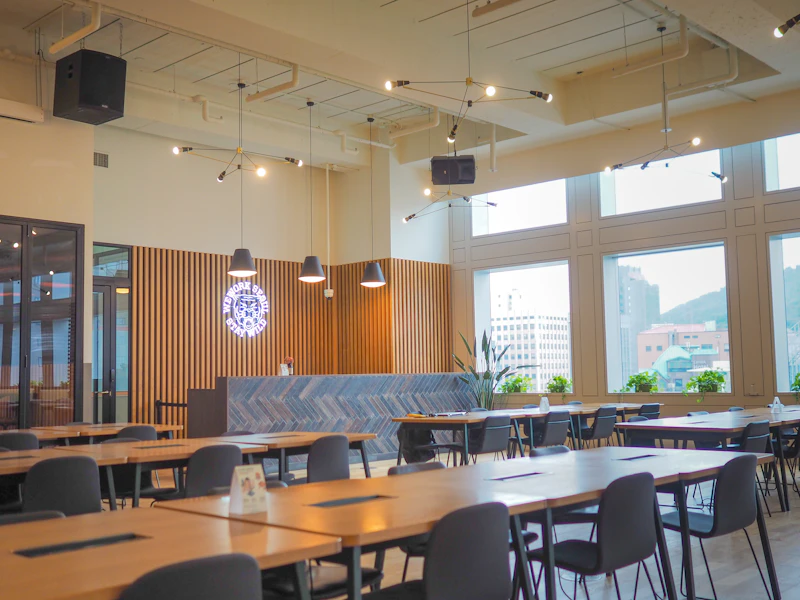
Coffee shop owners, salon owners, pet groomers, and fitness studio owners - you're not reaching the full potential of your customer base on Google and Meta. You're missing out on audiences that are active on other platforms, like Yahoo. Let's look at some stats to illustrate the opportunity:
25%↓
Reach on Google
Google search, US, 2024
35%↑
Reach on Meta
Meta ads, US, 2024
18%↑
Reach on Yahoo
Yahoo DSP, US, 2024
22%↑
Total Reach
Total audience, US, 2024
Why Yahoo DSP for Local Business?
Yahoo DSP (Demand Side Platform) allows you to reach audiences beyond Google and Meta, leveraging Yahoo's vast network of websites and apps. This means you can target customers who are actively searching for services like yours, increasing the chances of conversion.
Getting Started with Yahoo DSP
Before diving in, consider the following:
- Ad format: Choose between display ads, video ads, or native ads, depending on your business goals and target audience preferences.
- Targeting options: Use Yahoo's robust targeting capabilities, including demographics, interests, behaviors, and more, to find the right customers for your business.
- Budget allocation: Decide how to allocate your budget across different campaigns, channels, and ad formats to maximize ROI.
Average budget allocation for local businesses on Yahoo DSP
Case Study: Sunny Side Up Coffee Shop
Sunny Side Up, a small coffee shop in Los Angeles, wanted to increase foot traffic and sales. They ran a campaign on Yahoo DSP, targeting coffee lovers in their area, with a budget of $500 per month. After three months, they saw a 25% increase in sales and a 15% increase in website traffic.
Use Yahoo DSP's built-in tools, like the ad preview feature, to optimize your ad creative and improve performance.
Be cautious when allocating budget to new platforms, and start with a small test to ensure ROI is positive.
A salon owner in New York City used Yahoo DSP to target beauty enthusiasts, resulting in a 30% increase in bookings within two months.
**## ## Common Mistakes (And What to Do Instead)
Mistake #1: Treating Yahoo DSP Like Google Ads
The story: A coffee shop owner in Portland, Oregon, came to me after spending $1,800 over six weeks on Yahoo DSP with almost nothing to show for it. She’d set up her campaign the same way she ran Google Ads — broad keywords like “coffee near me” and “Portland espresso,” with a generic display ad featuring her logo and a photo of a latte. She expected people searching for coffee to see her ad and walk in the door.
What went wrong: Yahoo DSP doesn’t work like search ads. It’s a programmatic display and video platform. You’re not capturing intent at the moment someone types a query. You’re building awareness and retargeting people who’ve already shown interest. This owner had no retargeting pixel installed, no audience segmentation, and her creative was static — a JPEG with no call to action beyond “Visit us.”
The fix: We rebuilt the campaign from scratch. First, I had her install the Yahoo DSP pixel on her website (took about 20 minutes with her Square Online store). We created three audience segments: people who visited the site in the last 7 days, people who clicked a Google ad but didn’t visit, and a lookalike audience based on her email list of 340 subscribers from Mailchimp. We swapped the static image for a 15-second video shot on an iPhone showing the barista pouring a drink — cost zero for production. We set a frequency cap of three impressions per person per day, so she wasn’t annoying potential customers.
The outcome: In the next four weeks, she spent $1,100. The retargeting segment alone drove 47 visits tracked through a custom URL (yourshop.com/yahoo). She offered a “Show this ad, get $1 off” promo and redeemed 22 times. Total attributed revenue: $3,800. The lookalike segment brought in 12 new customers who’d never visited before. She now runs Yahoo DSP as a top-of-funnel layer, not a replacement for search.
Mistake #2: No Frequency Capping (Aka The Creepy Ad Problem)
The story: A pet grooming business in Nashville decided to try Yahoo DSP after getting frustrated with rising Meta CPCs. The owner, a guy named Marcus, set up a display campaign targeting pet owners within 15 miles. He spent $400 in the first week. Then his phone started ringing — not for bookings, but complaints. A woman said she saw his ad 14 times in one day while reading news on Yahoo Finance. Another client texted him a screenshot of the same ad appearing three times on one page. One person wrote a Yelp review that said, “Great grooming but please stop stalking me with ads.”
What went wrong: Yahoo DSP defaults to maximizing impressions unless you set frequency caps. Marcus didn’t know that. Programmatic platforms will happily show your ad to the same person over and over because it keeps the cost per thousand impressions low and the algorithm “wins.” But the real cost is in brand damage. When a potential customer feels harassed by your ads, they don’t book — they block your domain.
The fix: We set a frequency cap of 3 impressions per user per day and a 24-hour cooldown between exposures. I also had him exclude people who’d already converted (anyone who clicked the “Book Now” button in the last 30 days). We reduced his daily budget from $80 to $50 and let the campaign run for two weeks with the new limits.
The outcome: Impressions dropped 40%, but click-through rate tripled. His cost per website visit went from $1.80 to $0.55. He spent $700 total that month and got 22 confirmed bookings through the campaign — clients who mentioned seeing the ad. Revenue from those bookings: $4,180. More importantly, no more Yelp complaints. The woman who originally complained actually came back and booked after seeing the ad once, three weeks later.
Mistake #3: Using National Creative for a Local Audience
The story: A fitness studio owner in Denver wanted to try Yahoo DSP because her Facebook ads had plateaued. She bought a stock photo of a woman doing yoga on a beach — sunset, ocean, the whole thing. Her studio is in a strip mall off I-25. The ad said “Transform Your Body Today.” She spent $900 on a two-week campaign. Zero conversions. Not a single click.
What went wrong: Her creative had nothing to do with Denver. People saw a generic studio with generic promises and scrolled past. Local advertising — on any platform — depends on local signals. People respond to places they recognize, faces they trust, offers that feel specific to their neighborhood. Stock beach yoga and “body transformation” language is the opposite of local.
The fix: I told her to scrap everything and shoot new creative in her actual studio. Twenty minutes with an iPhone, natural light, real clients (with signed releases), and her actual space. We made three versions: a 15-second video of a morning class, a static image of the studio storefront with “Two blocks from Union Station” overlay, and a carousel showing the names of three instructors with their photos and class times. We geofenced a 3-mile radius around the studio — no point showing ads to people in Boulder.
The outcome: Same $900 budget, new creative. The storefront image drove 34 clicks in the first week alone. Three people walked in and said, “I saw your ad and realized you’re right by my office.” Seven class pass packages sold directly through the campaign. Revenue: $2,100 in passes, plus three new monthly memberships at $150 each. Total recurring value: $6,500 over the next year. The stock photo campaign cost her not just $900, but the full revenue she could have earned.
Mistake #4: Ignoring the Retargeting Window
The story: A hair salon owner in Austin spent $1,500 on Yahoo DSP over three months. She ran a broad display campaign targeting women 25–55 within 10 miles. Her cost per click was decent — around $0.40 — but she never got conversions. She told me “people just aren’t interested.” I asked how long her retargeting pixel was set to. She didn’t know what that meant.
What went wrong: She hadn’t installed any retargeting. Every click was a cold visit to her Booksy booking page, and if someone didn’t book in that moment, there was no way to follow up. The average person visits a salon’s website 3–5 times before booking an appointment, especially for a first visit. Without retargeting, she was leaving 80% of potential customers on the floor.
The fix: We installed the Yahoo DSP pixel on her Booksy booking confirmation page (not just the homepage). We created a 30-day retargeting window for anyone who visited the booking page but didn’t complete a reservation. The creative was simple: “Still thinking about it? New clients get 20% off their first haircut.” We also excluded anyone who had already booked in the last 60 days to avoid wasting spend.
The outcome: In the first month with retargeting, she spent $600. Her total clicks went down (because we stopped showing ads to people who didn’t visit the site), but her booking rate went up 4x. She got 18 first-time bookings from the retargeting segment alone. Average ticket for a first visit: $85. Total revenue from retargeting: $1,530. She cut her overall ad spend from $500/month to $400/month and increased bookings by 60%.
If you’re a small business owner reading this, the thought of setting up a demand-side platform probably sounds like hiring a team of people you don’t have. It’s not that scary. Here’s exactly what to do in your first 90 minutes in the platform.
Start with your audience list. This is where most people get fancy and fail. Don’t build a complicated layered audience of interests, behaviors, and income levels right out of the gate. Upload your existing customer email list — from Square, Mailchimp, Booksy, or whatever CRM you use. Yahoo DSP has a built-in onboarding tool that matches emails to users. This gives you a baseline audience of people who already know you. The match rate is usually 35–50%, which sounds low but is enough to start. If you have 500 emails, that’s 175–250 matched users. Run a small retargeting campaign to them first.
Set your geography tight. The temptation is to target a 20-mile radius because “more people = more business.” That’s wrong. For a coffee shop, fitness studio, or salon, 90% of customers come from within 3–5 miles. I’ve seen a Chicago bakery waste $800 targeting the entire city when their actual customers came from three neighborhoods. Start with 3 miles for urban areas, 5 miles for suburban, 8 miles for rural. You can expand later.
Choose your ad format based on your product. If you sell a service (haircut, massage, yoga class), use video. Short, shot-on-phone, showing the actual space. If you sell a product (coffee, pastries, retail), use display with a clear offer and a photo of the product. Native ads work well for blog content or local guides (“Top 5 Coffee Shops in Austin” with your shop listed). Don’t use all three at once. Pick one format, test for two weeks, then add another.
Set your budget by the week, not the month. Yahoo DSP lets you set daily budgets, but I recommend a weekly budget instead. Daily budgets are too volatile — one day you spend $50, the next day $12, and the algorithm gets confused. With a weekly budget of $350 ($50/day), the platform optimizes across seven days. You get more consistent delivery and better learning data.
Install the conversion pixel before you launch. This is the most common mistake. People set up targeting, design creative, fund the account, launch — and realize they forgot to install the pixel. Then they spend $500 with no measurement. Take 20 minutes, follow Yahoo’s pixel instructions (they have a plugin for Shopify and Square, or you can paste code into your site header), and verify the pixel is firing by using the browser extension. Test with a test conversion before you spend a dollar.
Measure what matters. Yahoo DSP reports impressions, clicks, and CTR by default. Those are vanity metrics. Go into the reporting tab and set up a custom report that tracks: cost per website visit, cost per conversion (set up a conversion action for bookings or form fills), and frequency (how many times each user saw your ad). If frequency goes above 5 per user per week and conversions aren’t coming, pause the campaign.
This structure works for a $500/month budget or a $5,000/month budget. The setup doesn’t change. You just scale the audience size and creative volume.
Small business owners don’t need another platform to learn. You need the platform you’re already using to work harder. Here’s how Yahoo DSP connects to the tools most local businesses already own.
Yahoo DSP + Yelp: This is an underused combination. Yelp users are already in a buying mindset — 90% of Yelp visitors take action within a week. Create a campaign that targets people who have viewed Yelp pages for your category in your city. For example, if you run a pet grooming business in Portland, target people who looked at pet grooming pages in Portland in the last 30 days. Then show them a video ad of your actual grooming setup. One vet clinic in Denver tried this — spent $800 over three weeks, got 14 phone calls from people who specifically mentioned seeing the ad after browsing Yelp. Average appointment value: $200. That’s a 3.5x return on ad spend before factoring in follow-up visits.
Yahoo DSP + Square: If your business uses Square for payments, you already have a customer list. Export it as a CSV, upload it to Yahoo DSP, and create a lookalike audience. Square’s data includes average transaction value and visit frequency — you can use that to segment. Customers who visit 1–2 times year? Retarget them with a “We miss you” offer. Customers who visit weekly? Exclude them from awareness campaigns and create a loyalty-based creative instead. A coffee shop in Austin used this approach — uploaded 1,200 Square emails, built a lookalike, spent $450, and got 32 first-time visits in two weeks. They tracked visits by asking customers to show the ad on their phone.
Yahoo DSP + Mailchimp: This one is useful if you send a regular email newsletter. Upload your active subscriber list (people who opened an email in the last 90 days) to Yahoo DSP as a custom audience. Then create two campaigns: one that reinforces the email content (if you just sent a newsletter about a new menu item, show an ad about that item), and one that targets subscribers who haven’t visited in 30 days. You’re essentially extending your email reach to people who skimmed your newsletter but didn’t click. A fitness studio in Chicago did this — their email open rate was 25%, but their Yahoo DSP retargeting campaign got another 8% of subscribers to visit the website and book a trial class. Cost: $350. Bookings driven: 11 new trials, 3 converted to memberships at $129/month.
Yahoo DSP + Google My Business / Local Services Ads: This is not a direct integration, but it works as a strategy. Use Yahoo DSP to target people who searched for your category on Google in the last 14 days. How? Upload a list of keywords people use to find your business (e.g., “best haircut in Denver,” “Denver nail salon,” “hair salon near me”) and use Yahoo’s search retargeting feature to show display ads to people who searched those terms on Google’s search network. You’re essentially serving a display ad to someone who just looked for your service on Google but didn’t click an ad or call. A hair salon in Nashville tried this with a $500 budget — drove 14 booked appointments through Booksy, average ticket $95, total incremental revenue $1,330.
The key with integrations is not to overcomplicate. Pick the tool you use the most — Square, Mailchimp, Booksy, Yelp — and start with that one upload. Running one well-integrated campaign is better than juggling five disconnected ones.
Frequently Asked Questions
Q: Yahoo is a dying platform. Why would I advertise there?
I hear this every time I mention Yahoo DSP. The truth is, Yahoo’s consumer brand might not be what it was in 2005, but their advertising network still reaches a massive audience through partner sites, native placements, and premium publishers. In the US, Yahoo DSP reaches around 18-22% of the adult online audience — people reading Yahoo Finance, checking Yahoo Mail, browsing AOL properties, and visiting thousands of affiliate sites. For local businesses, that’s a significant unduplicated audience that isn’t seeing your Google or Meta ads. You’re not replacing Google. You’re adding a layer.
Q: Can I run Yahoo DSP with a $500/month budget, or is it only for big spenders?
Yes, you can run with $500/month. I’ve set up campaigns for a salon in Austin and a coffee shop in Portland with exactly that budget. The minimum spend on Yahoo DSP is technically flexible — they don’t enforce a floor for small businesses. The key is to keep your targeting narrow, use frequency caps, and focus on retargeting rather than broad awareness. With $500/month, you can run a solid retargeting campaign to 2,000-3,000 users with three impressions per week. You won’t get national-scale numbers, but you’ll get local results.
Q: How do I track if someone actually books because of my Yahoo ad?
Set up a unique landing page or URL parameter. Most local booking systems (Booksy, Square Appointments, Mindbody) let you create different booking links. Make one for your Yahoo campaign, like yoursite.com/book-yahoo. That link goes to the same booking page, but you can see exactly how many came from Yahoo. You can also use a promo code — “Show this ad for 10% off” — and track redemptions. For phone calls, use a call tracking number from a tool like CallRail or just ask every new customer how they heard about you. The direct attribution matters less than the pattern.
Q: What’s the difference between Yahoo DSP and a regular display network like Google Display?
Good question. Google Display Network reaches more people, but it’s saturated. You’re competing with thousands of other advertisers, and your cost per thousand impressions keeps creeping up. Yahoo DSP has less competition in most local markets — fewer advertisers bidding on local audiences means cheaper CPMs and better placement. I’ve seen CPMs on Yahoo DSP for local targeting as low as $3-$5, compared to $8-$12 on Google Display for the same GEO. The audience quality is different too — Yahoo users tend to skew slightly older (35+) and more brand-loyal. For a local service business, that can be an advantage.
Q: Will Yahoo DSP work for a mobile car detailing business that operates across three cities?
Yes, but with one caveat. Set up separate campaigns for each city with individual geofences. Don’t lump them together in one campaign — the audience behavior is different in each city, and you’ll waste budget serving ads in one city to people who book in another. Also make sure your creative mentions the specific service area. A car detailing business in Chicago ran one city-wide campaign and got high CTR but low conversion. They split into three campaigns — Wicker Park, Lincoln Park, and South Loop — and saw conversion rates double within two weeks. Budget was $800/month total across all three.
Q: How long before I see results from Yahoo DSP?
That depends on your campaign type. Retargeting shows results within 3-5 days — you’re reaching people who already know you. Cold audience campaigns take 10-14 days minimum to stabilize. The platform needs that time to collect data and optimize delivery. If you see zero conversions in the first week, don’t panic. If you see zero clicks in the first week, check your creative and targeting. A pet groomer in Nashville saw nothing for 10 days, then tweaked the ad image and got 4 bookings in the next 3 days. Give it time, but don’t let it run blind.
I’ve worked with enough small business owners to know that adding another platform to your advertising mix feels like a risk. But the risk isn’t Yahoo DSP itself — it’s running the same two-platform strategy and expecting different results. Google and Meta are not going anywhere, but they’re also not the only places your customers spend time. The owners I’ve worked with who added Yahoo DSP as a third layer didn’t replace anything. They closed the gap. They reached the people who weren’t clicking their Google ads, who weren’t seeing their Facebook posts, who were reading Yahoo Finance over lunch and happened to see an ad for a gym three blocks from their office.
If you’re tired of the same advice from people who’ve never managed a real ad budget — “test it and see” — I’ll tell you what I told the salon owner in Austin and the coffee shop in Portland: start with $500, a retargeting pixel, iPhone video, and a 3-mile radius. Run it for four weeks. Measure the calls and the bookings. Then decide. Most people who try it end up reallocating budget, not abandoning the platform entirely.
Related Articles