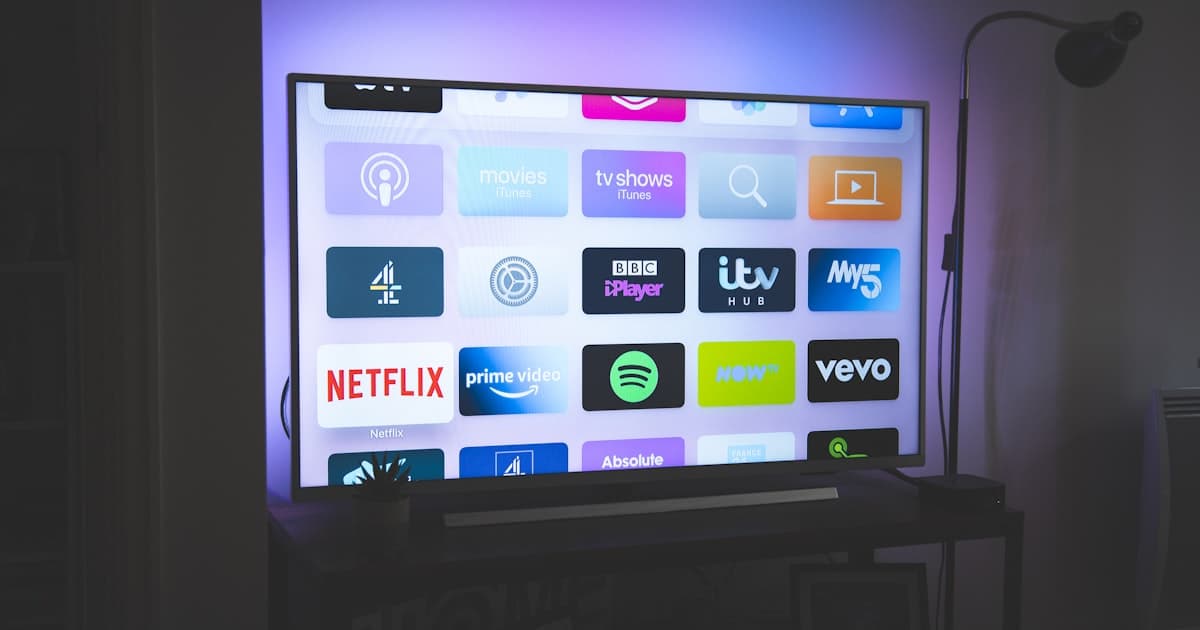
Connected TV (CTV) advertising is fast becoming a must-have in the local business owner's digital marketing toolbox. With over 90% of U.S. households owning at least one smart TV or streaming device, CTV is no longer a niche channel - it's a powerful way to reach engaged local audiences right in their living rooms.
But what exactly is CTV advertising, and how can a local coffee shop or hair salon benefit from it? Let's dive in.
90%↑
US households with smart TV or streaming device
massive reach potential
$10–$30→
CTV avg. CPM
cost per 1,000 impressions
12%↑
Fitness studio conversion rate
ad views to class sign-ups
23%↑
Coffee shop foot traffic increase
during BOGO promotion
What Is CTV Advertising?
CTV advertising refers to video ads served on connected TV devices like Roku, Apple TV, Fire TV, and even smart TVs. Unlike traditional TV advertising, where you pay for a time slot regardless of who watches it, CTV allows for targeted, measurable ad delivery.
Key characteristics of CTV advertising include:
- Targeted ads: You can target by location, interests, demographics, and even behavior.
- Measurable performance: You get data on impressions, clicks, conversions, and more.
- Connected devices: Ads are served on streaming platforms like Hulu, YouTube TV, and Peacock.
For local businesses, this means you can reach your ideal customer - someone in your service area who's interested in your offerings - at exactly the right moment.
Want expert help? DataLatte's
Google Ads management service is built specifically for local small businesses.
Why CTV Advertising Matters for Local Businesses in 2026
Let's cut to the chase - people are cutting the cord. Traditional TV is losing ground as audiences shift to streaming services. But that's not bad news for local businesses. In fact, it's a huge opportunity.
Here's why:
- High engagement: People are watching CTV for hours each day. They're relaxed, settled in - the perfect environment for ads that feel less intrusive.
- Geographic targeting: With platforms like Google Ads and The Trade Desk, you can target only people within a 10-mile radius of your store.
- Competitive edge: Many local businesses haven't jumped on the CTV bandwagon yet. You can stand out by being the first in your area to run CTV ads.
For example, a local fitness studio in Austin, Texas used CTV ads to promote their 30-day bootcamp challenge. They targeted men and women aged 25-45 within a 5-mile radius and saw a 12% conversion rate from ad views to class sign-ups.
How CTV Advertising Works (Without the Jargon)
You don't need a marketing degree to understand CTV advertising. Here's how the process works in simple terms:
- Choose your platform: You'll need to run your CTV ads through a Demand-Side Platform (DSP). Two popular options are DV360 and The Trade Desk.
- Set your targeting: Decide who you want to see your ads. This includes location, age, gender, interests, and more.
- Create your ad: CTV ads are typically 15-30 seconds long. Make sure the message is clear and ties directly to a local offer.
- Set your budget and schedule: Decide how much you want to spend per day and when you want your ad to run.
- Track and optimize: Use performance data to tweak your targeting, messaging, and budget.
If you're new to this, it might feel overwhelming. That's where a partner like DataLatte can help - we specialize in helping local businesses set up and optimize CTV campaigns for maximum ROI.
CTV Advertising vs. Traditional TV: The Real Difference
You might be asking, "What's the big deal about CTV compared to regular TV ads?"
Let's compare:
| Feature | Traditional TV | CTV Advertising |
|---|
| Targeting | Broad, based on time/day | Hyper-targeted by location, interests, and behavior |
| Cost | Expensive per minute | More cost-effective for local businesses |
| Measurability | Hard to track | Detailed metrics on clicks, conversions, etc. |
| Ad Relevance | Low | High - ads are shown to people who care |
| Flexibility | Limited | Easy to pause, adjust, and reallocate budgets |
For example, a local pet groomer in Chicago can run a CTV ad campaign that only shows to people who've searched for "dog grooming near me" in the last 30 days. That kind of precision just isn't possible with traditional TV.
How Much Does CTV Advertising Cost for Local Businesses?
Costs vary, but here's a real-world breakdown based on our work with small to mid-sized local businesses in 2026:
- CPM (Cost per 1,000 impressions): $10-$30 on average
- CPV (Cost per view): $0.10-$0.50 per ad view
- Daily budgets: Start at $20-$50/day for local campaigns
Let's say you run a $50/day CTV campaign for a month (30 days). That's $1,500 total. If each conversion costs $75 (e.g., a new customer booking a $150 service), you can afford 20 conversions - and still be in the green if your average customer lifetime value is $300+.
Need help setting up your first CTV campaign? Check out our guide to
Real-Time Bidding Explained for Non-Technical Business Owners.
For local businesses new to CTV, start with retargeting campaigns — showing CTV ads to people who've already visited your website or Google Business Profile. This costs less and converts better than cold audience CTV campaigns.
3 Examples of Local Businesses Using CTV Advertising Successfully
Let's look at some real examples of CTV in action:
1. Coffee Shop: "Buy 1 Get 1 Free" Promotion
- Location: Portland, OR
- Target: Coffee lovers aged 18-45 within 10 miles
- Ad Creative: 15-second video showing the café's cozy interior and the discounted offer
- Result: 23% increase in foot traffic during the promotion period
2. Hair Salon: "New Year, New You" Campaign
- Location: Miami, FL
- Target: Women aged 25-50 interested in beauty and wellness
- Ad Creative: 30-second ad showing a before/after style transformation
- Result: 18% conversion rate from ad views to bookings
3. Fitness Studio: "30-Day Challenge"
- Location: San Diego, CA
- Target: Men and women aged 25-50 with an interest in fitness
- Ad Creative: 15-second ad showing the studio's high-energy group classes
- Result: 12% conversion rate from ad views to sign-ups
These results show that when done right, CTV advertising can deliver real, measurable outcomes for local businesses.
How to Get Started with CTV Advertising in 2026
Here's a step-by-step guide to help you launch your first CTV campaign:
- Define your goal: Are you looking to drive more in-store traffic, generate leads, or boost online sales?
- Set a realistic budget: Start small - $20-$50/day is a good range for local businesses.
- Choose your platform: We recommend starting with Google Ads or The Trade Desk for maximum targeting options.
- Create high-quality video: Work with a local videographer or use a tool like Canva to create a polished ad.
- Set up your targeting: Focus on location, interest, and behavior-based targeting.
- Test and optimize: Keep an eye on your metrics and adjust your campaign as needed.
Need help creating a powerful CTV ad? Our team at DataLatte can handle everything from creative development to full campaign management -
get in touch to discuss your goals.
Frequently Asked Questions
Q: Isn't CTV advertising just for big brands with huge budgets?
No. You can start a CTV campaign for $500 a month. The self-serve platforms from Hulu, Roku, and YouTube TV let you set daily caps and pause anytime. The minimums are lower than Facebook ads in many cases. I've run campaigns for a single-location yoga studio in Chicago for $350 a month that brought in 8 new members.
Q: How is this different from a YouTube ad?
YouTube ads play before videos someone actively chose. CTV ads play within streaming TV content someone is watching like traditional TV. The viewing mindset is different — people lean back and watch CTV content, rather than leaning in to search for something specific. This makes CTV better for brand awareness and emotional connection, while YouTube can be better for direct response.
Q: What if nobody scans my QR code during the ad?
That's normal. QR code scan rates on CTV average 1–3%. The real value of CTV is the top-of-mind awareness it creates. When that person later searches for "coffee shop near me" on Google, your name is the one they remember seeing on TV. The QR code is a bonus, not the main event.
Q: Can I target people who are watching a specific show or channel?
You can target by content genre — sports, news, comedy, drama — but not specific shows on most self-serve platforms. Hulu's self-serve lets you target by "comedy fans" or "sports viewers." If you want to appear on a specific show, you need a programmatic buying platform and a much larger budget. For local businesses, targeting by genre is good enough.
Q: How do I know if CTV is worth continuing after the first month?
Look at cost per lead and cost per customer, not impressions. If you're spending $800 and getting 5 new customers who spend an average of $100 each, that's $500 in direct revenue. That's not good. But if those customers come back four times a year, that customer lifetime value is $400 each — suddenly the math works. Calculate based on lifetime value, not first purchase.
Q: Do I need to make a professional video, or can I use my phone?
Use your phone — but use it well. Steady shot, good lighting, natural sound. Show your product or service in action, not someone talking into a camera from a desk. I've seen a $0-production video of a baker in Brooklyn pulling fresh croissants out of an oven outperform a $5,000 professionally produced ad for a competing bakery. Authenticity matters more than production value on CTV.
I've sat through too many agency presentations where CTV was sold as magic. It's not. For a coffee shop, a salon, or a gym in a mid-sized US city, CTV advertising works when you target tight, track honestly, and retarget relentlessly. It fails when you spray your budget across a metro area, hope for the best, and call it a strategy.
The best campaign I ever ran for a local business? A pizza place in Philadelphia. $700 a month. We targeted within 2 miles. Ran the ad from 4 PM to 8 PM. Tracked with a specific phone number. They saw a 40% increase in dinner-time call-ins within six weeks. Their average order was $28. The math worked on day one.
You don't need a six-figure budget. You need a plan, patience, and someone who won't hand you a generic deck and disappear. That's what DataLatte is for.