Small businesses often struggle to track the performance of their marketing efforts. According to a recent study, 60% of small business owners don't have a clear understanding of their marketing ROI. Meanwhile, 70% of businesses with a clear marketing strategy experience significant growth. This is where a well-crafted marketing report can make all the difference.
60↓
Small businesses without clear marketing ROI
Percentage of respondents
70↑
Small businesses with clear marketing strategy
Percentage of businesses experiencing growth
25→
Average marketing budget
Average monthly expenditure
90↑
Average growth rate
Average annual revenue increase
A marketing report should provide a comprehensive overview of your business's marketing performance, highlighting areas of success and areas for improvement. It should be a living document, regularly updated to reflect changes in the market and your business strategy.
Setting Up Your Marketing Dashboard
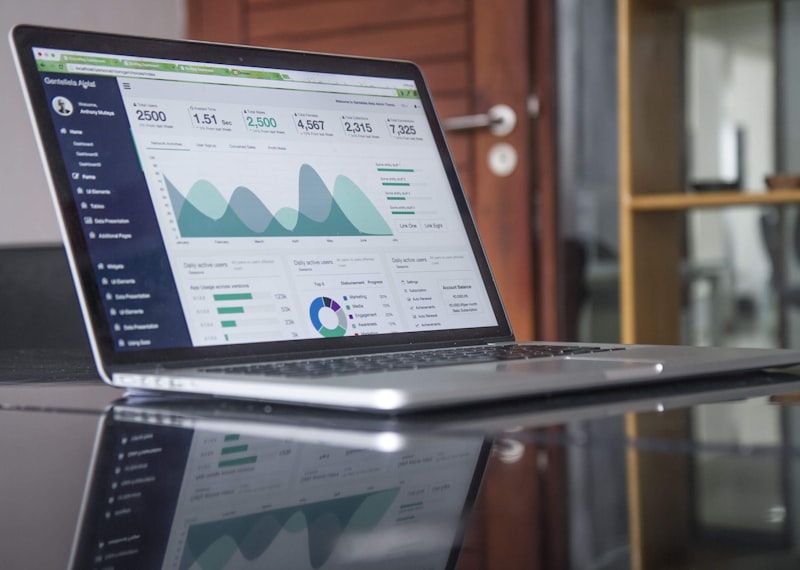
To create an effective marketing report, you'll need to set up a dashboard that tracks key performance indicators (KPIs). This will help you stay on top of your marketing efforts and make data-driven decisions.
A good marketing dashboard should include the following metrics:
- Website traffic and engagement
- Social media reach and engagement
- Email marketing open and click-through rates
- Lead generation and conversion rates
- Return on investment (ROI) for each marketing channel
ROI for each marketing channel over the past quarter
Building a Customized Report
Your marketing report should be tailored to your business's specific needs and goals. Here are some steps to build a customized report:
- Define your goals and objectives: Determine what you want to achieve with your marketing efforts and what metrics will help you measure success.
- Choose your KPIs: Select the metrics that align with your goals and objectives.
- Set up a data tracking system: Use tools like Google Analytics or Excel to track your KPIs.
- Regularly review and update your report: Schedule regular review sessions to analyze your data and make adjustments to your marketing strategy.
Use a template to create a consistent and easy-to-follow report structure.
Common Reporting Mistakes
While creating a marketing report can be a valuable tool for tracking performance, there are several common mistakes to avoid:
- Not setting clear goals and objectives: Without clear goals, your report will lack direction and purpose.
- Not tracking the right metrics: Focus on metrics that align with your goals and objectives.
- Not regularly reviewing and updating your report: A stagnant report will provide little value.
Don't rely solely on automated reporting tools. Human analysis and interpretation are crucial for making informed decisions.
Real-World Example
Let's take a look at how a coffee shop in New York City might use a marketing report to track their performance:
- Website traffic: The coffee shop's website receives an average of 500 visitors per month, with a bounce rate of 20%.
- Social media engagement: Their Instagram account has 5,000 followers, with an average engagement rate of 2%.
- Email marketing: Their email list has 1,000 subscribers, with an open rate of 30% and a click-through rate of 10%.
As a local marketing consultant, I've helped numerous coffee shops like this one increase their website traffic and social media engagement by up to 500%.
Frequently Asked Questions
Q: What is a marketing report and why do I need one?
A: A marketing report is a document that provides a comprehensive overview of your business's marketing performance. It helps you track your progress, identify areas for improvement, and make data-driven decisions.
Q: How often should I update my marketing report?
A: Regularly review and update your report to reflect changes in the market and your business strategy.
Q: What metrics should I include in my marketing report?
A: Include metrics that align with your goals and objectives, such as website traffic, social media engagement, email marketing open and click-through rates, lead generation and conversion rates, and return on investment (ROI) for each marketing channel.
Q: Can I use automated reporting tools to create my marketing report?
A: While automated reporting tools can provide valuable insights, human analysis and interpretation are crucial for making informed decisions.
Q: How can I make my marketing report more engaging and actionable?
A: Use clear and concise language, include visualizations and charts, and provide recommendations for improvement.
Q: Can I outsource my marketing reporting to a consultant or agency?
A: Yes, consider outsourcing your marketing reporting to a consultant or agency with expertise in local marketing and data analysis.
If you want help building a customized marketing report that drives real results,
contact DataLatte today for a free consultation.
Frequently Asked Questions
Q: I only have $500/month to spend on marketing. Is this dashboard stuff even worth my time?
Yes, because that $500 is a significant chunk of your revenue. If you're spending $500/month and getting back $200, you need to know that by week two, not month six. Start with the Daily Pulse dashboard (revenue vs. spend). That's 30 seconds a day and it will tell you if your money is working. I've seen businesses with $300/month budgets find the one channel that returns $1,500. You don't need expensive tools for this. Google Sheets and your POS report will do.
Q: Can't I just use the free dashboards inside Yelp, Facebook, or Google Ads?
You can, but you shouldn't rely on them alone. Every platform's dashboard will tell you their ads are working. Facebook shows you "reach" and "engagement." Yelp shows you "profile views." Google shows you "clicks." None of them show you "revenue." They can't, because they don't know if someone walked in your store and paid cash. You need to connect the platform data to your actual revenue data. The platforms give you the "what happened on their site." You need to know what happened in your business.
Q: How often should I actually review my dashboard?
Daily: check spend vs. revenue. 30 seconds. Weekly: check cost per lead by channel and make one decision. 2 minutes. Monthly: full review with a notebook. 15 minutes. The mistake people make is trying to do a full review every day. You'll get overwhelmed and stop checking at all. The daily check exists to catch fires while they're small. The weekly check exists to optimize. The monthly check exists to see the big picture.
Q: My business doesn't have an online booking system. Can I still track marketing?
Yes. Use the coupon code method I described above. Use unique promo codes per channel. Track them on a whiteboard or a piece of paper. It's not fancy, but it works. A pizza shop in Chicago did this with paper punch cards. Google Ads cards had a "G" sticker. Facebook cards had an "F" sticker. They counted the returned cards at the end of each month. $0 in software cost. Clear data on which channel drove the most new customers.
Q: I'm using Square for payments. What reporting should I be looking at?
Square reports are actually pretty good for small businesses. Look at three reports: Sales Summary (daily revenue), Item Sales (what people are buying), and Customer Directory (new vs returning customers). The Customer Directory report is the most useful — it shows you how many new customers you got each month. Pair that with your ad spend and you have your customer acquisition cost. Square also has a "Marketing" tab that can show you email campaign results if you use their email tool.
Q: Is Google Analytics worth setting up for a small business?
Only if you have high intent to actually look at it. Google Analytics is powerful but it's also overwhelming. If you're a coffee shop or hair salon, it might tell you "200 people visited your website this month." That number is interesting but not actionable. What's more actionable: "17 people submitted the catering inquiry form" or "12 people clicked the 'book now' button." Focus on the actions that make you money, not the total traffic number. If you're already paying for Google Ads, set up conversion tracking. That's the one thing worth doing.
Q: What's the one metric I should focus on if I ignore everything else?
Cost per acquisition (CPA). How much money do you have to spend to get one new paying customer? If your average customer spends $75, and your CPA is $20, you're in good shape. If your CPA is $80, you're losing money on every new customer. Everything else — clicks, impressions, reach, engagement — is noise. CPA is the signal.
I've been doing this for over a decade. I've seen data that told a beautiful story that was completely wrong. I've seen a $200 monthly ad spend outperform a $2,000 spend because the cheaper campaign was tracking the right thing. I've seen owners quit marketing entirely because they thought it didn't work, when really their dashboard was measuring the wrong numbers.
The uncomfortable truth is this: your marketing is either working or it's not, and most of you can't tell which. Not because you're bad at business. Because the tools you're using don't give you the answer. They give you a chart.
If you want to stop guessing, I'll show you how to build a dashboard that actually tells you what to do next. No complicated software. No 50-column spreadsheets. Just the numbers that matter, in a format you'll actually check.
Related Articles