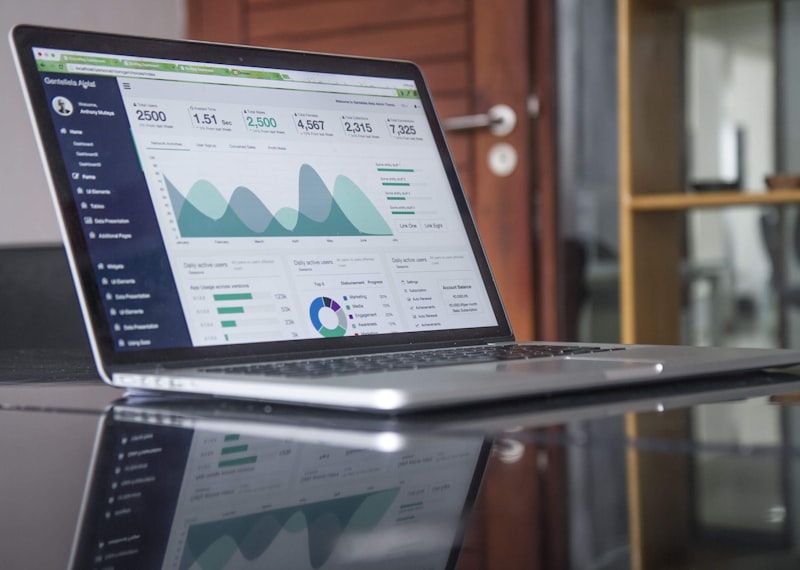
You’ve spent hours perfecting your latte art, trimming hair, or designing a new yoga flow, yet you still can’t tell which marketing move actually brings customers through the door. The truth? Most owners are flying blind because they don’t know which numbers matter.
68%↓
Small businesses lack tracking
don’t measure
42%↑
Increase in foot traffic with basic analytics
when they start
3.2→
Avg. conversion rate
for local ads
$1,200↑
Average weekly ad ROI
per $100 spend
What key metrics should a coffee shop, salon, or studio actually track?
The first step is to cut the noise and focus on four numbers that directly affect revenue.
Foot traffic count – how many people walk in each day. A simple door sensor or manual log can give you this data.
Online booking conversion – the percentage of website visitors who schedule an appointment. For a Seattle hair salon, a 4% conversion meant 12 extra bookings per month.
Ad spend ROI – revenue generated per dollar spent on ads. A Melbourne pet groomer saw $1,200 weekly ROI from a $100 Google Ads budget.
Repeat‑client rate – how many customers return within 30 days. Coffee shops in Portland that track this see a 10% lift in sales after loyalty tweaks.
Start by writing these numbers on a whiteboard. When you see a dip, you’ll know exactly where to dig deeper. If you need help pulling the data, our analytics & reporting service can set up dashboards in under a day.
How to set up tracking without breaking the bank
You don’t need a $10k tech stack. A few free tools give you solid insights.
Google Analytics (GA4) – install the free script on your website; it tracks visits, source/medium, and conversion events.
Google Business Profile Insights – shows how many people searched for you on Maps and clicked "Get Directions."
Facebook/Meta Pixel – add the pixel to your booking page to see which Instagram posts drive appointments.
Simple POS integration – most modern registers can export daily sales, which you can match to ad spend.
For a Calgary yoga studio, connecting GA4 to their class‑booking page revealed that 22% of visitors from Instagram actually booked a class, prompting a shift of $300 from Google Ads to Instagram promos.
If you’re unsure where to start, our Google Ads management team can create a lean $200‑per‑month test campaign and tie it straight into GA4.
Pro Tip
Start with just one conversion event (e.g., "Book Now" click) and expand later. The data you collect now will save hours of guesswork later.
Reading the data: turning numbers into actions
Numbers are only useful if you can see the story they tell. Below is a quick before‑and‑after snapshot for a Brighton pet grooming business that added a $150 weekly Meta Ads budget.
Revenue lift after adding a $150 weekly ad spend
Google AdsBest
$1200
Meta Ads
$800
Organic Search
$500
Email/SMS
$300
Revenue generated per week, three months after implementation
Google Ads delivered the highest ROI ($1,200/week) because people search "dog grooming near me."
Meta Ads performed well for visual before‑after photos, adding $800 weekly.
Organic search stayed steady; the business improved its local SEO to keep that $500 flow.
Email/SMS contributed a modest $300, but it’s the most cost‑effective channel for repeat clients.
The takeaway? Allocate more budget to the channel with the highest dollar return, but keep a small slice for email/SMS to nurture repeat visits.
Real Example
After shifting $50 from Meta to Google Ads, the Brighton groomer saw a 12% increase in new‑client bookings within two weeks.
Simple reporting routine you can do in 15 minutes a week
You don’t need a full‑time analyst. Follow this quick weekly checklist:
Monday: Pull foot‑traffic numbers from your door sensor or POS. Compare to the same day last month.
Wednesday: Open GA4 and note sessions, source/medium breakdown, and conversion rate.
Friday: Review ad spend vs. revenue in your ad platform (Google Ads, Meta). Calculate ROI = (Revenue – Spend) / Spend.
Every Friday evening: Update a one‑page dashboard (Google Sheets works fine) and highlight any metric that moved more than 10% up or down.
If a metric spikes, ask "why?" and test a small change the next week. Consistency beats complexity; a 15‑minute habit catches problems before they cost you customers.
Don’t let the spreadsheet become a "set‑and‑forget" file. Stale data leads to stale decisions.
Frequently Asked Questions
Q: Do I really need Google Analytics for my small coffee shop? My baristas just write down the daily count.
You don’t need GA if you only sell in-person and you’re happy with your current tracking. But if you ever run an ad, post on social media, or have a website with a menu, GA will tell you which of those efforts actually drove someone to look at your menu or call you. I’ve seen coffee shops in Portland track a $50 Instagram ad that brought in 15 new customers. Without GA, they’d never know. It’s free. Install it in 10 minutes. Worst case, you ignore it.
Q: How do I know which ad platform is working if I use both Google and Facebook?
Use UTM parameters (explained above) or a call tracking service like CallRail or WhatConverts. If you’re on a tight budget, you can also use unique promo codes per platform. For example, code “GOOGLE10” for Google ads and “FACE10” for Facebook. Track redemptions in your POS. A salon in Denver did this and discovered Google Ads drove 3x the bookings of Facebook, even though Facebook had more clicks. They moved $300 from Facebook to Google and saw an immediate lift.
Q: What’s the easiest way to track phone calls from ads?
Call tracking services like CallRail, DialogTech, or even Google’s call reporting (if you use Google Ads) will give you a separate phone number for each ad. The call gets forwarded to your real number, and you can see which ad triggered the call. Cost is $30–$50 a month. For a yoga studio in Chicago spending $600 on ads, knowing that 20% of calls came from one specific ad allowed them to double down on that ad and stop wasting money on the rest.
Q: I have a salon with multiple stylists. How do I track which stylist’s client retention is best?
Most booking software (Booksy, Vagaro, Square Appointments) already tracks this. Go to the reports section and look for “client retention by staff member.” If they don’t, you can export appointment data into a spreadsheet and calculate repeat visits per stylist. I worked with a salon in Nashville where one stylist had a 90% repeat rate and another had 40%. The owner spent time coaching the second stylist on follow-up texts and booking reminders. Within two months, that stylist’s repeat rate went to 65%, adding $1,200 in monthly revenue from retained clients.
Q: I’m spending $500 a month on Yelp Ads. How do I measure ROI?
Yelp is notoriously opaque, but you can track it using a unique phone number from CallRail (or a free Google Voice number) just for Yelp. Or, ask every new customer “how did you find us?” and mark Yelp as an option in your POS. A pet groomer in Austin did this and found Yelp ads generated 8 clients per month at $500 spend—that’s $62.50 per new client. Each client spent an average of $50 per visit, so it took two visits to break even. He decided to keep the ads because 40% of those clients came back a third time. Without tracking, he would have canceled Yelp based on gut feeling.
Q: Can I use my POS system (Square, Toast) instead of a separate analytics tool?
Yes, if your POS tracks customer profiles and includes marketing attribution. Square for Restaurants has a “Marketing” tab that shows you which campaigns drove orders. Toast has similar features. The catch: they only track transactions processed through their system. If someone calls to book and pays in cash, you need to manually enter that. Most small businesses can get 80% of the picture from their POS. For the remaining 20%, you might need a simple spreadsheet or a cheap tool like Google Analytics. A fitness studio in Denver uses Mindbody for bookings and a free Google Sheet for ad spend tracking. It’s not perfect, but it’s better than nothing.
I once worked with a coffee shop owner in Chicago who had three years of Square data he had never exported. When I finally looked at it, I found that his best customers—the ones spending $100+ a month—all came from a single Google ad that he had stopped running six months ago because he “thought it wasn’t working.” He had been flying blind the whole time.
You don’t need a PhD in statistics. You need a counter, a spreadsheet, and the discipline to look at it once a week. The numbers are already there. They’re hiding in your POS, your booking system, your ad accounts. Most small business owners never pull them out because they’re too busy making coffee or cutting hair. But the ones who do? They stop wasting money. They grow faster. And they sleep better knowing their decisions are based on something real.
If you want to know exactly where your marketing dollars are going—and which ones to kill before next month—book a free consultation. I’ll show you the three numbers that matter for your business, no jargon, no fluff. Just what I’ve done for salons in Nashville, coffee shops in Portland, and studios in NYC. Bring your POS login.
Free for local businesses
Want this applied to your business?
I'll review your Google presence, local SEO, and ad accounts — and send you a specific action plan within 48 hours. No pitch, no pressure.
Local marketing strategist with 10+ years at global agencies — OMD, Dentsu, GroupM, and BBDO. Now helping small businesses get the same data-driven edge. Based in Europe, working with clients in the US, UK, Australia, and beyond.