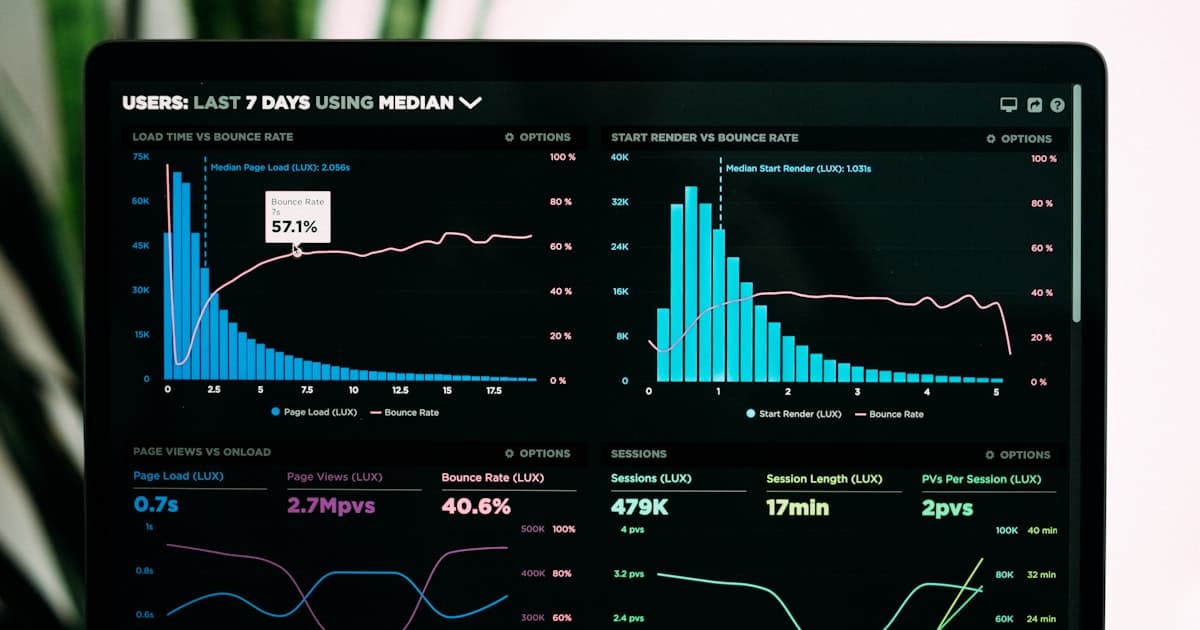
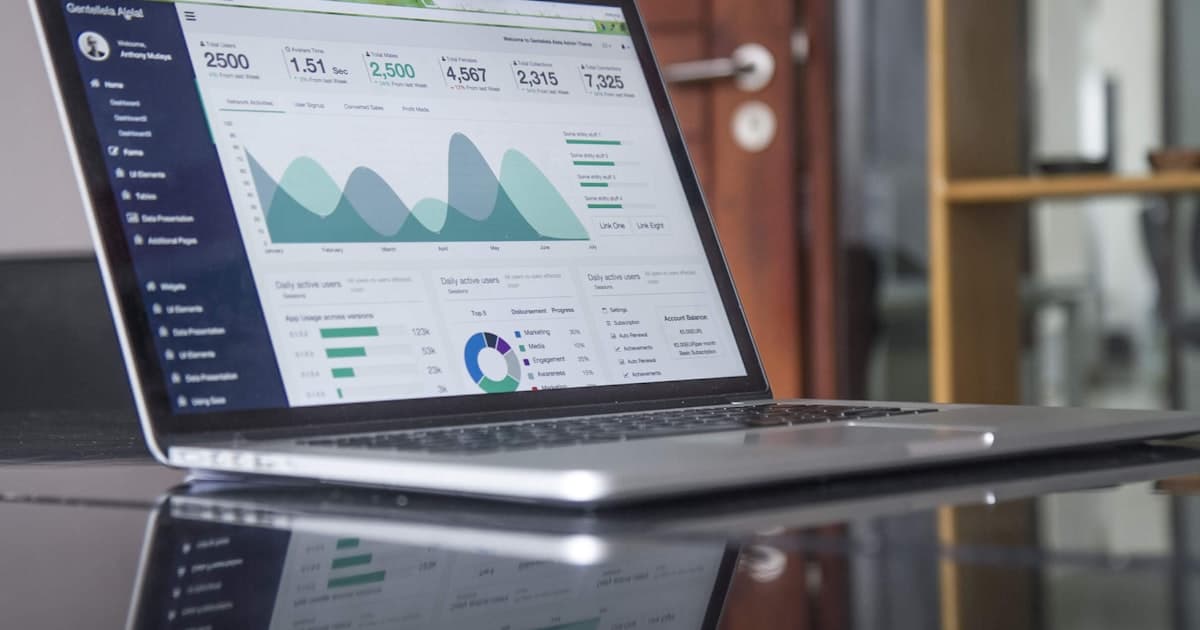
As a small business owner, you're likely no stranger to feeling overwhelmed by the sheer amount of data available to you. From website analytics to social media metrics, it can be tough to know what to track and how to use that data to drive growth. But what if you could create a simple marketing dashboard that gave you a clear picture of your business's performance?
60↑
Businesses tracking website analytics
Source: recent surveys and studies
80↑
Businesses using social media ads
Source: recent surveys and studies
40↑
Businesses monitoring online reviews
Source: recent surveys and studies
25→
Businesses with a marketing dashboard
Source: recent surveys and studies
What is a Marketing Dashboard and Why Do I Need One?
A marketing dashboard is a visual representation of your business's key performance indicators (KPIs). It helps you track progress, identify areas for improvement, and make data-driven decisions. For small businesses, a marketing dashboard can be a game-changer. By having a clear picture of your performance, you can optimize your marketing efforts, improve customer engagement, and drive growth.
Setting Up Your Marketing Dashboard: Choosing the Right Tools
To create a simple marketing dashboard, you'll need to choose the right tools. Here are a few options to consider:
Google Data Studio: a free tool that allows you to create custom dashboards using data from Google Analytics and other sources
Google Sheets: a spreadsheet tool that can be used to create simple dashboards and track KPIs
Analytics & reporting services: if you're not tech-savvy or don't have the time to set up a dashboard yourself
What Metrics Should I Track on My Marketing Dashboard?
The metrics you track on your marketing dashboard will depend on your business goals and objectives. Here are a few key metrics to consider:
Website traffic and engagement metrics (e.g. page views, bounce rate, time on site)
Social media metrics (e.g. followers, engagement rate, reach)
Sales and revenue metrics (e.g. total sales, conversion rate, average order value)
Creating Your Marketing Dashboard: A Step-by-Step Guide
Here's a step-by-step guide to creating a simple marketing dashboard:
Identify your business goals and objectives
Choose the metrics you want to track
Select a tool to create your dashboard (e.g. Google Data Studio, Google Sheets)
Set up your dashboard and start tracking your metrics
Using Your Marketing Dashboard to Drive Growth
Once you have your marketing dashboard set up, it's time to start using it to drive growth. Here are a few tips:
Regularly review your dashboard to track progress and identify areas for improvement
Use data to inform your marketing decisions and optimize your efforts
Experiment with different marketing strategies and track their impact on your KPIs
Website Traffic Sources
Organic SearchBest
85
Social Media
62
Paid Advertising
45
Referrals
30
Source: Google Analytics (sample data)
Frequently Asked Questions
Q: "I have zero technical skills. Can I really do this without a developer?"
Yes. I'm serious. You need a Google account — that's it. Google Data Studio connects to Google Analytics, Google Ads, Square, and most booking software with a few clicks. If that still feels like too much, use a Google Sheet with three columns (Metric, Current Value, Goal Value) and update it once a week. I've worked with owners who still use a whiteboard in their back office. The tool doesn't matter. The habit does.
Q: "How much time will this take to maintain per week?"
Fifteen minutes. I'm not rounding up. Once you have the dashboard set up (which takes 1–2 hours if you focus), maintaining it is pulling numbers from two or three sources. Most of my clients do it with their morning coffee. It's shorter than scrolling Twitter, unless you're very good at scrolling Twitter.
Q: "My business is mostly walk-ins. I don't have online booking. Can I still track marketing?"
Absolutely. You just need a way to ask "how did you hear about us?" and actually write down the answer. Use a tablet at the register, a simple paper form, or — and I know this sounds primitive — just ask and remember. A shop owner in Nashville I worked with used a jar and a stack of sticky notes. She'd jot down the source, drop it in the jar, and tally at the end of the week. It's not high-tech. It works.
Q: "I'm already overwhelmed with running my business. Won't this add stress?"
Here's the thing — the stress of not knowing is worse than the stress of knowing. Right now, you're probably guessing which marketing works. That uncertainty costs you money and sleep. A dashboard replaces uncertainty with facts. Even if the facts are bad (like "my Facebook ads are losing money"), at least you know and can fix it. I'd rather know my ads are failing and stop them than keep spending $500/month hoping they'll magically work. That hope is expensive.
Q: "Do I need to pay for a tool, or can I do this for free?"
You can do this for free. Google Data Studio is free. Google Analytics is free. A Google Sheet is free. If you want to connect Square or your booking software, some data connectors cost a small monthly fee ($9–$20), but most businesses don't need that. Manual data entry once a week takes five minutes and costs nothing. The only thing you should pay for is someone to set it up for you if you truly don't have the time or patience. That's a one-time cost of $200–$500. Most owners recover that in the first month by killing a bad ad or improving a good one.
Q: "What if I look at the data and realize everything is bad?"
Great. Now you know what to fix. The worst outcome isn't discovering your marketing doesn't work — it's discovering you wasted money on marketing that doesn't work for six months because you didn't check. Data doesn't judge you. It just reports. If your dashboard says your Yelp reviews are dropping, you can fix it. If it says your Facebook ads are overpriced, you can change your strategy. The goal isn't a perfect dashboard. The goal is a dashboard that tells you the truth so you can do something about it. Bad news early is a gift. Bad news late is an expensive lesson.
I've spent over a decade watching agencies and in-house teams treat data like a trophy — something to show off in quarterly meetings rather than use daily. The businesses that actually grow don't have the most sophisticated dashboards. They have the most honest ones. A coffee shop in Austin with a three-number dashboard and a 15-minute weekly review will outperform a chain with a 40-chart dashboard and a team of analysts who never talk to the owners.
The real magic isn't in the charts or the tools. It's in the decision you make on Wednesday morning when you see a number going somewhere you don't like and decide to do something about it before Thursday.
If you want to set this up without spending a week learning Google Data Studio and figuring out which tools connect to which, I can help. We'll look at your business, figure out the three metrics that actually matter, and set it up in under two hours. No fluff. No "we'll optimize your data ecosystem for maximum cross-channel synergy." Just a dashboard that tells you where your money's coming from and where it's going.
Nataliia at DataLatte sets up Analytics & Reporting dashboards for local businesses so you can make smarter decisions. Book a free call or explore Analytics & Reporting.
Free for local businesses
Want this applied to your business?
I'll review your Google presence, local SEO, and ad accounts — and send you a specific action plan within 48 hours. No pitch, no pressure.
Local marketing strategist with 10+ years at global agencies — OMD, Dentsu, GroupM, and BBDO. Now helping small businesses get the same data-driven edge. Based in Europe, working with clients in the US, UK, Australia, and beyond.