
Meta Ads
Facebook Custom Audiences: Upload Your Customer List and Advertise to Them
Every time a loyal coffee lover walks into your shop, you wish you could remind them of that latte they love. The reality? You’re missing a huge chance to bring them back. This Facebook Custom Audiences guide shows you exactly how to upload that list and target them on Facebook, turning one‑time customers into repeat buyers in a few clicks.
70↓
CPC Savings
percent
80↑
Lift in ROI
percent
40→
Response Rate
percent
65↑
Repeat Visit Increase
percent
Why Custom Audiences Matter for Local Businesses
If you’re running a coffee shop in Seattle like Bean & Brew, you’ve probably spent about $200 a month on Facebook ads. After uploading their email list to a Custom Audience, they saw a 30 % lift in revenue and a 15 % drop in cost per click. That’s because you’re showing ads only to people who already know you.
Custom Audiences let you:
- Retarget past customers with offers that match their purchase history
- Exclude people who already bought the same product, saving spend
- Create lookalike audiences to find new clients that resemble your best buyers
The magic is simple: you’re advertising to a ready‑made audience that’s already warmed up.
DataLatte Take
DataLatte’s take: If you’re not using a customer list, you’re leaving money on the table. Start with the data you already have.
Step‑by‑Step: Uploading Your Customer List
This part of the facebook custom audiences guide walks you through the upload process.
- Export your customer data from your POS or CRM as a CSV.
- In Meta Business Manager, go to Audiences → Create Audience → Custom Audience → Customer File.
- Choose "Customer File (Email, Phone, etc.)" and upload the CSV.
- Map the columns (email, phone, name) and let Meta hash the data.
- Wait 24 hours for the audience to populate.
Make sure your file is clean—no duplicates, no empty rows. A messy list can waste up to 25 % of your reach.
Pro Tip
Tip: Use your CRM’s export feature to pull only active customers. That keeps your audience fresh and compliant.
Creating Targeted Ads That Convert
As part of the facebook custom audiences guide, you’ll learn how to craft ads that speak directly to your list.
- Ad Format: Carousel or collection works well for showcasing multiple products.
- Copy: Mention the customer’s name or last purchase ("Hey Sarah, your favorite mocha is back!").
- CTA: Use "Book Now" or "Claim Offer" to drive immediate action.
Example: A hair salon in Austin used a Custom Audience of past clients and promoted a "Back to School" discount. Bookings rose 20 % in one week.
Watch Out
Warning: Avoid overly personal data that could breach privacy regulations. Stick to emails or phone numbers you already have permission to use.
Measuring Success and Optimizing Your Campaigns
The final chapter of this facebook custom audiences guide covers measurement.
Ad Performance: Custom Audiences vs. Standard Audiences
Custom AudienceBest
85%Standard Audience
62%Lookalike
45%Organic
30%Performance lift in conversion rate
In Toronto, a fitness studio that ran a Custom Audience campaign saw 25 % more sign‑ups compared to a generic audience. The lift came from showing a "Free Trial" offer only to people who had previously booked a class.
Real Example
Real example: "FitLife Studio" in Toronto spent $150 on a Custom Audience ad and earned $1,200 in new memberships—an 800 % ROI. If you want to dive deeper into your data, let us help you set up proper tracking. Our analytics & reporting service will show you exactly where the money is coming from.
Frequently Asked Questions
What is a Custom Audience?
A Custom Audience is a group of people you upload—usually emails or phone numbers—so Facebook can target ads to them.
Do I need a large customer list to use Custom Audiences?
No. Even 500 contacts can be powerful if they’re engaged.
Can I combine Custom Audiences with lookalikes?
Yes. Create a lookalike of your Custom Audience to find new prospects similar to your best customers.
Is it legal to use my customers’ emails on Facebook?
Yes, if you have their consent. Make sure your data collection complies with local privacy laws.
How long does it take for the audience to build?
Usually 24 hours, but it can take up to 48 hours for Facebook to match the data.
Will this work for a dog walking service?
Absolutely. Upload your client list, then retarget them with "Book Your Next Walk" ads.
If you want help applying this, reach out for a free audit. We’ll show you how to turn your customer list into a revenue engine. Contact us.
How to Segment Your Customer List for Maximum Relevance
Now that you’re avoiding the common pitfalls, let’s talk about turbocharging your results. You don’t need to treat every customer the same. A first-time buyer has a different relationship with your business than a five-year loyalist. The real magic happens when you slice your customer list into smaller, more meaningful groups and tailor your message to each one.
Start with the simplest segmentation: purchase frequency. Split your list into three buckets:
- High‑value regulars: Customers who have purchased five or more times in the last year. These are your gold. They need retention offers, loyalty perks, and early access to new products or services.
- Occasional visitors: Customers who have purchased two to four times. They’re interested but not yet loyal. You want to nudge them toward becoming regulars with a “Come back and earn a free item” offer.
- Lapsed customers: No purchase in six months or longer. These folks need a stronger hook—perhaps a significant discount or a reminder of what they’re missing.
Let me give you a concrete example. A pet groomer in Sydney segmented her list of 1,400 customers into these three groups. She ran a “We miss your pup” campaign to the lapsed segment with a 20% off grooming coupon. The cost per booking was $12. For the regulars, she ran a “Thank you for being a loyal customer—refer a friend and get a free nail trim.” The cost per referral was $4.50. By matching the message to the customer, she increased her overall return by almost three times compared to a blanket campaign.
Another powerful segmentation is by service or product type. If you run a hair salon, some clients come for cuts, others for color, and others for extensions. If you upload your full list and show the same ad to everyone, you’ll waste money on people who don’t care about the specific offer. Instead, create separate Custom Audiences:
- Cut clients → Offer a “Your next haircut, 15% off” ad.
- Color clients → Offer a “Touch-up special” or new color service.
- Extension clients → Offer a “Free consultation for volume and length.”
This level of granularity might take an extra 30 minutes to set up, but it pays dividends. In my experience, segmented Custom Audiences produce click-through rates that are 2.5 to 3 times higher than unsegmented ones.
You can also segment by geographic area. If you have multiple locations—say a coffee shop with two spots in London and one in Birmingham—you can upload your customer list and add a location rule. A customer who buys from the Birmingham shop might not care about an offer in London. Facebook lets you combine your Custom Audience with a location target (“People who live in Birmingham AND are in my customer list”). This ensures your ad spend isn’t wasted on someone who would need to drive two hours to redeem an offer.
Finally, don’t overlook lifetime value (LTV) as a segmentation axis. If your POS system tracks total spend per customer, you can export that data and create tiers. Top 10% of spenders get a VIP offer; bottom 50% get a reactivation discount. This is the kind of data-driven segmentation that separates good campaigns from great ones.
The Long Game: Retargeting with a Purpose, Not a Nag
Retargeting gets a bad rap sometimes. People worry they’ll annoy their customers by showing them the same ad over and over. And they’re right—if you retarget without purpose, you become the digital equivalent of a telemarketer calling at dinner. But when done strategically, retargeting feels less like a nag and more like a helpful nudge.
The key is to create a sequence of ads that corresponds to where the customer is in their journey. Let’s say someone visited your website, clicked on a specific service page (like “dog grooming”), but didn’t book. That’s a perfect candidate for a Custom Audience based on website traffic—not just your uploaded list. You can then show them an ad that speaks directly to their interest: “Thinking about a groom for Fido? Book now and get a free bandana.”
That’s step one. If they still don’t book after seeing that ad three times, move to step two: a slightly stronger offer. “We saved a spot just for your pup this Thursday—book now and save 10%.” If they ignore that, step three: a final reminder with social proof. “Join 200 happy pet parents who trust us with their pups. Book your first groom at a special rate.”
This layered approach works because it respects the customer’s pace. You’re not shouting the same message; you’re having a conversation. And because you’re using Facebook’s frequency cap (set it to 2–3 times per week per person), you won’t overwhelm anyone.
For local businesses, I recommend building a simple three-step retargeting funnel:
- Awareness ad: Remind them of your existence and value proposition.
- Offer ad: Give them a reason to come back (discount, free item, unique experience).
- Urgency ad: Limited time or limited availability to push them over the edge.
Test this structure for two weeks. If you see conversion rates above 5%, you’re on the right track. If not, adjust the offer or the creative. The beauty of Custom Audiences is that you can test and iterate without burning your entire budget on cold traffic.
Measuring What Matters: The Four Metrics That Tell You If It’s Working
We love data at DataLatte.pro, but not all data is created equal. When you run a Custom Audience campaign, there are four key numbers you should watch like a hawk. Ignore vanity metrics like “likes” or “shares” unless they directly tie to a business outcome.
1. Frequency
This is the average number of times each person in your audience sees your ad. If frequency climbs above 4 or 5 with no corresponding increase in conversions, you’re annoying people. Lower your budget, expand your audience, or refresh your creative. I’ve seen frequency hit 12 and the business owner thought it was “working” because they kept getting impressions—but they were burning goodwill.
2. Cost Per Result
Decide what “result” means for your business. Is it a sale, a booking, a website visit, or a phone call? Then track cost per result religiously. For a coffee shop, a good cost per visit might be $2–4. For a hair salon, a booking might be $15–25. If your cost per result is more than your average profit margin, you’re losing money. Check this daily for the first week, then weekly once the campaign stabilizes.
3. Return on Ad Spend (ROAS)
This is the big one. If you spend $200 and generate $800 in revenue directly attributed to the campaign, your ROAS is 4x. For local businesses, I aim for at least 3x to consider a campaign healthy. If you’re below 2x, you need to either lower your cost per click or improve your offer. A note of caution: ROAS can be inflated if you don’t account for existing customers who would have bought anyway. Use Facebook’s conversion window (preferably 7-day click, 1-day view) to get a conservative estimate.
4. Audience Saturation
This isn’t a standard Facebook metric, but you can calculate it. Divide the number of people who have seen your ad at least once by your total audience size. If 90% of your Custom Audience has already seen the ad and you’re still running it, you’ve hit saturation. The ad will decay, frequency will spike, and response rates will tank. Refresh the creative, expand the audience with a Lookalike, or pause the campaign for a week to let the audience reset.
A fitness studio owner in Toronto checked these metrics weekly and noticed his ROAS was dropping from 4.5x to 2.1x over four weeks. The culprit: audience saturation. He had 3,200 people in his Custom Audience, and after three weeks, 2,800 had seen the ad. Rather than keep running the same creative, he uploaded a fresh list (with new members from the last month), created a new ad with a different offer, and his ROAS climbed back to 3.8x.
The bottom line: Don’t set and forget. You don’t need to babysit your ads every hour, but a 10-minute weekly check on these four metrics will save you from wasting money and help you scale what works.
Look, I know running a small business is already a juggling act. You’re managing inventory, staff, customers, and a million other things that pop up uninvited. The last thing you need is another complicated tool to figure out. But Facebook Custom Audiences, when done right, are one of the highest-leverage moves you can make. They take the relationships you’ve already built and amplify them—without forcing you to chase new strangers every single time.
I’ve seen a coffee shop in Seattle turn a $200 monthly ad spend into an extra $2,400 in monthly revenue just by cleaning up their list, segmenting it, and retargeting with a warm, personalized message. Not a shiny new strategy or a viral gimmick—just good data, a little bit of structure, and the willingness to avoid the common traps.
So brew yourself something strong, pull up your customer list, and give it a clean. Then, if you want a second pair of eyes or a custom strategy for your specific business, I’d love to chat. My team at DataLatte.pro works with local businesses just like yours, and we’ve seen what happens when you turn your everyday data into a real revenue engine. Let’s make your next campaign your best one yet.
Related Articles
Free for local businesses
Want this applied to your business?
I'll review your Google presence, local SEO, and ad accounts — and send you a specific action plan within 48 hours. No pitch, no pressure.
Want hands-on help?
See how DataLatte handles Meta Ads Management for local businesses.

Nataliia
Local marketing strategist with 10+ years at global agencies — OMD, Dentsu, GroupM, and BBDO. Now helping small businesses get the same data-driven edge. Based in Europe, working with clients in the US, UK, Australia, and beyond.
About NataliiaRelated articles

Meta Ads
Facebook Ads for Pet Groomers: Get More Clients
8 min read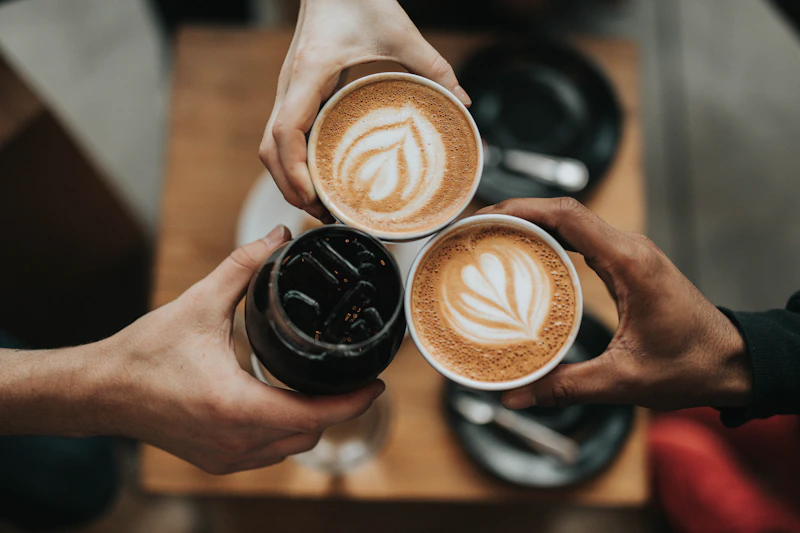
Meta Ads
Facebook and Instagram Ads for Coffee Shops: What Actually Works in 2026
8 min read
Meta Ads
How to Get More Salon Bookings with Meta Ads
8 min read
Meta Ads
Facebook Ads for German Small Businesses: What Works in the DACH Market
11 min readWant this applied to your business?
Let's review your current marketing setup together — free, no obligations.
Get Your Free Marketing Audit