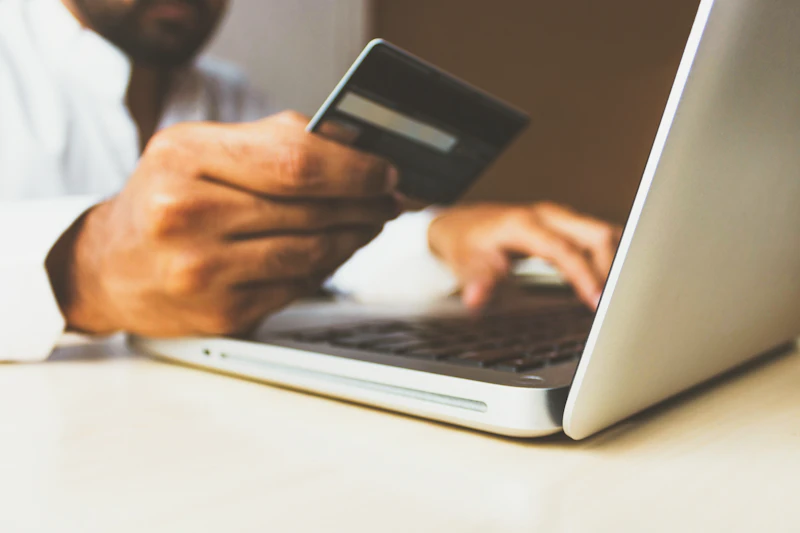
You're a small business owner, juggling multiple tasks while trying to reach new customers. You've heard about Facebook ads, but don't know where to start. With billions of daily active users, Facebook is an exciting platform to gain more visibility, drive foot traffic, and boost sales. But, with so many options and settings, it's easy to get overwhelmed and waste budget on ineffective ads.
67% of small businesses use Facebook ads for customer acquisition, while 56% use them for brand awareness. However, only 21% of small businesses have seen significant results from their Facebook ad campaigns. This gap between potential and actual results can be frustrating, especially when you have limited resources.
67%↑
Small businesses using Facebook ads for customer acquisition
Source: Facebook Ads for Small Business, 2026
56%↑
Small businesses using Facebook ads for brand awareness
Source: Facebook Ads for Small Business, 2026
21%↓
Small businesses seeing significant results from Facebook ads
Source: Facebook Ads for Small Business, 2026
1000→
Average monthly ad spend
Average ad spend for small businesses
To achieve real results with Facebook ads, you need a clear strategy and a step-by-step approach. In this guide, we'll cover the basics of Facebook ads for local businesses, from setting up your account to creating effective ad campaigns.
Step 1: Setting Up Your Facebook Ads Account
Before creating ads, make sure you have a Facebook Page for your business and a Facebook Ads account. If you already have a Facebook Page, you can use it to create ads. However, if you don't have a Facebook Page, create one and set it up with your business information, including your address, phone number, and hours of operation.
Step 2: Defining Your Target Audience
Your target audience is the group of people most likely to be interested in your products or services. For local businesses, your target audience might be people who live or work in your area, have specific interests or behaviors, or fit certain demographics. Use Facebook's targeting options to define your audience based on age, location, interests, behaviors, and more.
Step 3: Choosing Your Ad Objective
Your ad objective is the goal you want to achieve with your ad campaign. Facebook offers several ad objectives, including Awareness, Conversations, and Conversions. For local businesses, Awareness and Conversations objectives are often the best choices, as they aim to increase brand awareness and drive engagement with your content.
Step 4: Creating Your Ad Content
Your ad content is the visual and textual elements that will grab the attention of your target audience. Use high-quality images, videos, or carousels to showcase your products or services. Write clear, concise ad copy that communicates your value proposition and includes a clear call-to-action (CTA). Use Facebook's ad creative tools to create engaging, mobile-friendly ad content.
Step 5: Setting Your Budget and Bidding Strategy
Your budget and bidding strategy determine how much you want to spend on your ad campaign and how you want to compete for ad space. Set a daily or lifetime budget, and choose a bidding strategy that suits your goals, such as Cost per Click (CPC) or Cost per Thousand Impressions (CPM).
Step 6: Launching and Monitoring Your Ad Campaign
Once you've set up your ad campaign, launch it and monitor its performance regularly. Use Facebook's ad performance metrics to track your ad's reach, engagement, conversions, and return on ad spend (ROAS). Make adjustments to your ad targeting, ad creative, or budget as needed to optimize your ad campaign's performance.
Measuring Ad Effectiveness
Measuring ad effectiveness is crucial to ensuring you're getting the most out of your ad spend. Use Facebook's reporting tools to track your ad's performance and make data-driven decisions. Here's a comparison of the average ROAS for different ad objectives:
Average ROAS for Different Ad Objectives
Awareness
$50
Conversations
$75
ConversionsBest
$100
Source: Facebook Ads for Small Business, 2026
Tip: Use Facebook's built-in features, such as Facebook Pixel, to track your website conversions and optimize your ads for better performance.
Warning: Be cautious of ad fatigue, where your target audience becomes desensitized to your ads. Rotate your ad creative regularly and adjust your targeting to avoid ad fatigue.
Example: Check out how local business, Coffee Oasis, used Facebook ads to drive foot traffic and increase sales.
Common Mistakes to Avoid
Even the most well-intentioned Facebook ad campaigns can fall flat if you’re stepping on the same landmines that trip up hundreds of local business owners every month. I’ve seen coffee shop owners burn through $2,000 in two weeks with nothing to show for it but a handful of likes from people three states away. The good news? These mistakes are entirely avoidable once you know what to look for. Here are the five most common errors I see in the trenches—and exactly how to fix each one.
Mistake #1: Targeting Too Broadly (The “Everyone in Town” Trap)
You might think, “I want every single person in my city to see my ad.” It sounds logical—cast a wide net, catch more fish. But in practice, Facebook’s algorithm treats a broad audience like a confused waiter at a crowded café. It doesn’t know who to serve first, so it shows your ad to the cheapest, least relevant users—often people who have zero interest in what you offer.
Real example: A pet groomer in Austin, Texas, set her ad to target everyone within 20 miles of her shop. She spent $850 over three weeks and got 14 clicks to her website. That’s over $60 per click. Worse, none of those clicks booked an appointment. She was paying to show her grooming services to college students who didn’t own pets, retirees who already had a groomer, and commuters just passing through.
Why it hurts your wallet: Facebook’s delivery system optimizes for cost efficiency, not relevance. When you give it a broad, untargeted audience, it finds the cheapest impressions—often bots, accidental clickers, or people in entirely different demographics. Your ad spend vanishes into the void.
The fix: Layer your targeting with intent signals. Instead of “everyone in Chicago,” try:
Location: 5-mile radius around your business (not 20).
Demographics: Age range (e.g., 25–55 for a hair salon).
Interests: “Pet owners” for a groomer, “Fitness” for a gym, “Coffee enthusiast” for a café.
Behaviors: “Engaged shoppers” or “Frequent travelers” if relevant.
For extra precision, upload your current customer email list as a Custom Audience. Facebook will find similar people (a Lookalike Audience) who share their behaviors and interests. One coffee shop in Portland used a 1% Lookalike from their 500 best customers and saw their cost-per-lead drop from $18 to $3.42.
Action step: Before launching any ad, define your ideal customer profile. Write down three things they love, two problems they have, and one thing they’d do on a Saturday morning. Target that person, not everyone.
Mistake #2: Running Ads Without a Pixel (Flying Blind)
The Facebook Pixel is a tiny piece of code you install on your website. Without it, you’re sending ads into the dark—no way to know who visited, what they looked at, or whether they bought anything. I’ve spoken with dozens of small business owners who spent $1,000+ on ads but never installed the Pixel. They had no idea if their ads led to sales, website visits, or angry rants on Yelp.
Real numbers: A hair salon in Vancouver ran $1,200 in ads over two months. They tracked “results” solely by asking new clients, “How did you hear about us?” Only five people mentioned Facebook. That’s $240 per new client. When they finally installed the Pixel, they discovered that 47 people had clicked their ad, visited the booking page, but abandoned it because the page loaded slowly on mobile. A $200 website speed fix and a Pixel-retargeting campaign brought back 12 of those visitors, generating $1,800 in booked services.
Why it hurts your wallet: Without a Pixel, you cannot:
Retarget people who visited your site but didn’t convert.
Optimize your ad delivery for conversions (like bookings or purchases).
Measure accurate return on ad spend (ROAS).
Build Lookalike Audiences from your best customers.
The fix: Install the Facebook Pixel the first day you set up your ad account. If you’re not technical, use a plugin like PixelYourSite for WordPress, or ask your website host to add the code. Then, set up standard events (like “PageView” and “Purchase”) so Facebook knows what success looks like.
Action step: Go to Facebook Events Manager → Pixels → Create Pixel. Copy the base code and paste it into your website’s <head> section (or use a plugin). Then verify it’s working with the Facebook Pixel Helper Chrome extension. This takes 15 minutes and saves you hundreds of dollars.
Mistake #3: Using a Single Ad Creative for Weeks (Ad Fatigue)
Here’s a scene I see weekly: A business owner creates one beautiful ad, runs it for a month, and wonders why performance drops after day five. Facebook users scroll fast—they see your ad once, twice, maybe three times. By the fourth viewing, they’re bored. By the tenth, they’re annoyed. This is called ad fatigue, and it kills your click-through rates (CTR) and drives up your cost-per-click (CPC).
Real example: A fitness studio in Chicago ran the same video ad (a 30-second class montage) for 28 days straight. In week one, their CTR was 2.1% and cost-per-lead was $8.50. By week three, CTR dropped to 0.4% and cost-per-lead jumped to $31. They were paying 3.6x more for each lead because the same people kept seeing the same ad and ignoring it.
Why it hurts your wallet: Facebook rewards fresh, engaging content. When your ad frequency (the average number of times a person sees your ad) exceeds 3–4, your relevance score drops, and your costs soar. You’re essentially paying more to show your ad to people who’ve already decided not to click.
The fix: Plan a creative rotation strategy. Create 3–5 ad variations before you launch:
Image ad (professional photo of your shop or product)
Video ad (15–30 second clip showing your service in action)
Carousel ad (multiple images highlighting different products or services)
Testimonial ad (a quote from a happy customer overlaid on a photo)
Offer ad (a limited-time discount or freebie)
Rotate them every 5–7 days, or whenever your frequency hits 3.0. Use Facebook’s Dynamic Creative feature to automatically test different combinations of headlines, images, and calls-to-action.
Action step: Set a weekly calendar reminder to check your ad’s frequency in Ads Manager. If it’s above 3.5, pause that ad and launch a fresh creative. Keep a bank of 10–15 photos and 5 short video clips on your phone so you can create new ads in minutes.
Mistake #4: Ignoring Mobile Optimization (The Thumb-Scroll Test)
Over 91% of Facebook users access the platform on mobile devices. That means your ad—and the landing page it leads to—must look perfect on a 5-inch screen. Yet, I constantly see local businesses running ads with tiny text that’s unreadable on mobile, or linking to a desktop-only website that requires pinching and zooming.
Real example: A coffee shop in London ran an ad promoting their new seasonal latte. The image showed the latte in a beautiful ceramic cup, but the text “20% off when you order online” was only 8 pixels tall. On mobile, users couldn’t read it. They got 2,500 impressions and zero clicks. After resizing the text to 40 pixels and adding a bright “Order Now” button, the same ad generated 47 clicks in 48 hours.
Why it hurts your wallet: Facebook charges per impression, not per click. If your ad looks bad on mobile, you’re paying for impressions that never convert. Worse, if your landing page loads slowly (over 3 seconds) or requires scrolling sideways, users bounce instantly. Google’s data shows that 53% of mobile users abandon a page if it takes longer than 3 seconds to load.
The fix: Apply the thumb-scroll test. Open your ad on your own phone. Can you read the text without zooming? Does the image fill the screen? Does the call-to-action button appear without scrolling? If not, redesign.
For landing pages, use mobile-responsive templates (SquareSpace, Shopify, WordPress with a mobile-friendly theme all work). Keep forms short: name, email, and one custom field max. And above all, test your page load speed with Google’s PageSpeed Insights—aim for under 2.5 seconds.
Action step: Before launching any ad, send yourself the preview link. Open it on your phone. If you have to pinch-to-zoom or wait more than 3 seconds for the page to load, go back to the drawing board. Mobile-first isn’t optional—it’s the only game in town.
Mistake #5: Setting and Forgetting (The Ghost Campaign)
I call this the “Ghost Campaign” because the ad runs, money disappears, and you never check on it again. It’s shockingly common. A business owner sets up one ad, gets busy running their shop, and leaves the campaign running for weeks—even months—without any optimization. By the time they look at the results, they’ve blown their entire monthly budget on an ad that stopped performing after day three.
Real numbers: A pet groomer in Sydney set a $30/day budget and forgot about it for 45 days. That’s $1,350 spent. When they finally checked, they discovered the ad had a 0.2% CTR and had generated exactly three website visits—each costing $450. Worse, the ad was still running, eating another $30 per day while they read the report.
Why it hurts your wallet: Facebook ads are not a “set it and forget it” tool. Audience behavior changes, competitors launch new ads, seasons shift, and your offer becomes stale. Without regular check-ins, you’re paying for a campaign that’s slowly bleeding money.
The fix: Schedule a 15-minute ad review every Monday morning. During that time, check:
Cost-per-result: Is it higher than last week? If so, pause and test new targeting.
Frequency: Above 3.5? Rotate creative.
CTR: Below 1%? Refresh your headline or image.
Spend vs. revenue: Are you getting at least 3x ROAS? If not, adjust.
Also, set daily and lifetime budgets with hard caps. Use Facebook’s “cost per result” goal to bid smarter. And consider setting an automated rule: if cost-per-lead exceeds $20 (or your threshold), pause the ad automatically.
Action step: Open Facebook Ads Manager right now. If you have any campaign that’s been running for 14+ days without a review, pause it. Re-launch only after you’ve checked frequency, CTR, and cost-per-result. Then set a recurring Monday morning reminder to do a 15-minute audit.
Advanced Targeting Strategies for Local Businesses
Once you’ve avoided the common mistakes, it’s time to turn the dial from “spending money” to “making money.” The secret sauce for local businesses isn’t more budget—it’s smarter targeting. Facebook offers a treasure chest of audience options most small business owners never touch. Let me show you three that consistently deliver the highest ROI for our clients.
Strategy #1: Radius Targeting with a Twist
You already know you can target a 5-mile radius around your business. But most people stop there. The real power comes from combining radius targeting with exclusion. For example, if you’re a hair salon in downtown Seattle, you don’t want to show ads to people who live 10 miles away but work in a different neighborhood. They’re unlikely to drive across town for a haircut.
The twist: Layer your radius with behavioral data. Target people who are “frequent diners” or “coffee shop visitors” within a 3-mile radius. That audience is already in your neighborhood and likely has disposable income. One boutique fitness studio in San Francisco used this approach: they targeted women aged 25–45 within 1 mile of their studio who also had an interest in “organic food.” Their cost-per-lead dropped from $15 to $4.80 because they were reaching locals who already valued wellness.
How to set it up:
In Ads Manager, choose “Location” → “People living in or recently in this location.”
Set a radius of 3–5 miles.
Add a “Detailed Targeting” layer: “Interests” → “Health & Wellness” or “Coffee” or “Shopping.”
Add an exclusion: “People who live in this location” (if you only want to target visitors or commuters).
Pro tip: Use Facebook’s “Location Density” settings to target “High density” areas (downtown, commercial zones) vs. “Low density” (suburbs, rural). For a coffee shop, target high density during morning hours and low density on weekends.
Strategy #2: Custom Audiences from Your Customer Data
Your existing customers are your most valuable asset. They’ve already voted with their wallets. Facebook lets you upload their email addresses, phone numbers, or even Facebook User IDs to create a Custom Audience. Then you can:
Retarget them with upsells or loyalty offers.
Exclude them from acquisition campaigns (so you don’t waste money showing “new customer” ads to loyal regulars).
Create Lookalike Audiences to find new people who behave like your best customers.
Real example: A coffee roastery in Portland uploaded their 2,000 email subscribers to Facebook. They created a 1% Lookalike (the top 1% of Facebook users most similar to their list). That audience had a 4.7x higher conversion rate than their broad targeting audience. They then created a second Lookalike from their top 200 spenders (the “VIP” list). Those ads generated 30% higher average order value.
How to set it up:
Go to Audiences → Create Audience → Custom Audience.
Choose “Customer List.”
Upload a CSV file with email addresses (or phone numbers, with permission).
Wait 24–48 hours for Facebook to match the data.
Use this audience for retargeting or as the seed for a Lookalike.
Pro tip: Segment your list. Don’t upload everyone at once. Create separate lists for:
Customers who purchased in the last 30 days (high intent)
Customers who purchased 6+ months ago (lapsed, need re-engagement)
Newsletter subscribers who never bought (warm leads)
Then serve different ads to each group. The 30-day group gets a loyalty discount. The lapsed group gets a “We miss you” offer. The newsletter group gets a first-purchase deal.
Strategy #3: Life Event Targeting for Local Businesses
Most small businesses ignore life events. But these are goldmines. Facebook can target people who are:
Real example: A dog grooming business in Melbourne targeted “recently moved” people within 10 miles of their shop. The offer: “Free first groom for new neighbors.” Their CTR was 4.8% (industry average is 0.9%), and they booked 23 new clients in two weeks. Why? Because people who just moved are actively looking for local services and are more likely to try a new business.
How to set it up:
In Ads Manager, go to “Detailed Targeting.”
Choose “Demographics” → “Life Events.”
Select “Recently moved,” “New job,” “New relationship,” etc.
Layer with your local radius targeting.
Create a specific ad that acknowledges the life event: “Welcome to the neighborhood! Enjoy 20% off your first visit.”
Pro tip: Combine life events with seasonality. Target “new parents” in January (post-holiday baby boom) or “recently moved” in June (peak moving season). Your ad feels timely and personal, which drives engagement.
Scaling Your Ads Without Burning Cash
You’ve got a winning ad. It’s generating leads at $8 each, and you’re thinking, “Let me triple my budget and watch the magic happen.” Slow down. Scaling Facebook ads is an art—push too hard, and your results will crash. Here’s how to scale intelligently without lighting your budget on fire.
The 20% Rule
Never increase your daily budget by more than 20% in any given week. Facebook’s algorithm needs time to adjust to new spending levels. If you jump from $50 to $150 overnight, the algorithm resets—your ad goes back into “learning phase,” and performance often degrades for 3–5 days.
Real numbers: A hair salon client doubled their budget from $40 to $80 in one day. Their cost-per-lead jumped from $9 to $27 in 48 hours. They lost $540 before they caught the issue. After we applied the 20% rule (increase by $8 per day for a week), their cost-per-lead stayed stable at $9 while their daily leads doubled.
Action step: If your current budget is $50/day, increase it to $60 on Monday, then $72 on the following Monday, then $86 a week later. Over three weeks, you’ve nearly doubled your budget without shocking the system.
Test One Variable at a Time
When you have a winning ad, resist the urge to change everything. Don’t rewrite the copy, swap the image, and change the targeting all at once. You’ll never know what worked. Instead, run a split test.
How to do it:
Duplicate your winning ad set.
Change exactly one variable (e.g., the headline OR the image OR the call-to-action).
Run both versions simultaneously with the same budget.
After 3–5 days, declare a winner by comparing cost-per-result.
Pro tip: Keep a “champion” ad that you never change. Test new variations against it. Once a variation beats the champion by 20% or more, make that your new champion. Repeat forever.
Scale Horizontally, Not Vertically
Increasing your budget on one ad set is vertical scaling—it’s risky. Horizontal scaling means launching new ad sets with different targeting, different creative, or different audiences. This diversifies your risk and often leads to better overall results.
Real example: A fitness studio was spending $100/day on one ad set targeting women 25–45. They hit a ceiling at $150/day—costs spiked. Instead of pushing higher, they created three new ad sets:
Set A: Same targeting, new video creative ($50/day)
Set B: Lookalike audience from email list ($50/day)
Set C: Retargeting people who visited their website ($50/day)
Total budget: $200/day (same as vertical scaling). But now they had three revenue streams. Their combined cost-per-lead was actually lower than the original single ad set because each audience was more relevant.
Action step: Never put more than 30% of your total budget into any single ad set. If you have $300/day to spend, spread it across 4–5 ad sets. This protects you if one underperforms and lets you double down on winners quickly.
Measuring What Matters: KPIs for Local Businesses
Stop obsessing over “likes” and “shares.” They feel good but don’t pay your rent. For a local business, the only metrics that matter are the ones tied to revenue and foot traffic. Here’s what to track, and what to ignore.
The North Star Metric: Cost Per Acquisition (CPA)
Your CPA is the total ad spend divided by the number of customers who bought something. If you spent $500 and got 10 bookings, your CPA is $50. That’s the number you want to drive down.
How to calculate it: (Total Ad Spend) ÷ (Number of Conversions Tracked by Pixel) = CPA.
Benchmark: For a coffee shop, a CPA of $5–$10 per new customer is excellent. For a hair salon, $20–$30 is solid. For a gym, $50–$100 is reasonable (because lifetime value is higher).
The Vanity Metric to Ignore: “Impressions”
Impressions are how many times your ad appeared on a screen. It’s impressive-sounding but meaningless if nobody clicks or buys. I’ve seen clients celebrate 50,000 impressions, only to discover they got zero leads. Impressions without action are just expensive billboards in the digital desert.
What to track instead:
CTR (Click-Through Rate): Aim for 1% or higher. Below 0.5% means your targeting or creative needs work.
CPC (Cost Per Click): For local services, $0.50–$2.00 is healthy. Above $3.00 is a red flag.
Conversion Rate: Percentage of clicks that become leads or sales. 3–5% is average; 10% is excellent.
ROAS (Return on Ad Spend): Revenue ÷ Ad Spend. Aim for 3:1 minimum; 5:1 is where you scale aggressively.
The Forgotten Metric: Frequency
Frequency measures how many times the same person sees your ad. When it exceeds 4.0, you’re entering “annoying” territory. Your ad becomes less effective, and your cost-per-result climbs.
How to monitor it: In Ads Manager, add the “Frequency” column to your campaign view. Set a rule: if frequency > 4.0, pause the ad and launch a new creative.
Action step: Create a simple dashboard in Google Sheets or Excel. Every Monday, log your CPA, CTR, conversion rate, and frequency. Within 4 weeks, you’ll see patterns—which audiences work, which creatives fatigue, and when to scale.
Closing Thoughts (Nataliia’s Take)
I’ll be honest with you: Facebook ads aren’t a magic wand. They won’t fix a bad product, rude staff, or a dusty storefront. But when you combine a clean strategy with patient testing, they can become the engine that brings a steady stream of new faces through your door. I’ve seen a tiny coffee shop in Bristol go from 20 customers a day to 80, all because they targeted the right people with the right offer. It doesn’t require a huge budget—it requires a willingness to learn, a commitment to checking your numbers, and the courage to pause what isn’t working.
If you’re feeling stuck—maybe you’ve tried ads before and got burned, or you’re just not sure where to start—I’d love to help you personally. We can look at your business, your goals, and your budget, and build a plan that actually works for your local market. No jargon, no upsells, just practical advice that moves the needle. Book a free consultation and let’s brew something great together.
Local marketing strategist with 10+ years at global agencies — OMD, Dentsu, GroupM, and BBDO. Now helping small businesses get the same data-driven edge. Based in Europe, working with clients in the US, UK, Australia, and beyond.