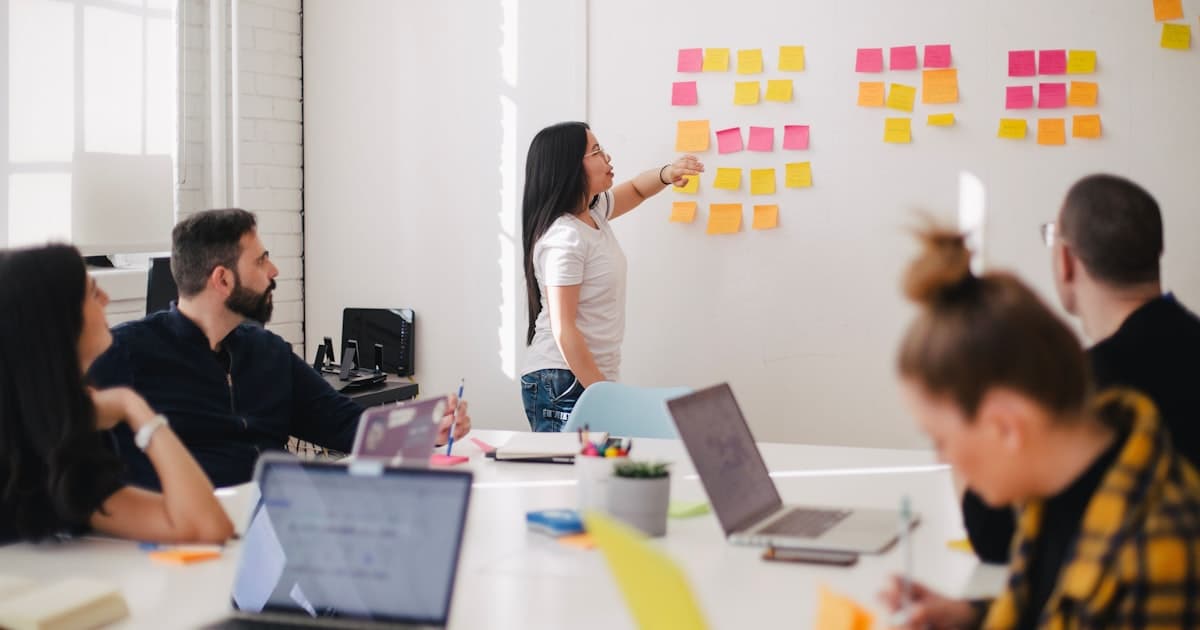
You're losing out on potential customers by not hosting events. 72% of local businesses use events as a marketing strategy, but 62% of consumers are more likely to purchase from a business that hosts events. By hosting events, you can build brand awareness, drive sales, and create loyal customers.
72↑
Local businesses use events as a marketing strategy
Source: Local Business Insights
62↑
Consumers more likely to purchase from event-hosting businesses
Source: Consumer Research
45↑
Increase in sales from events
Average increase in sales from events
30↑
Average revenue growth
Average revenue growth
Why Your Local Business Needs Event Marketing
Hosting events can help you stand out from the competition, build a loyal customer base, and drive sales. But with so many options, it can be hard to know where to start. Here are a few reasons why event marketing is a must for local businesses:
1. Build Brand Awareness and Loyalty
Host a coffee tasting: Invite customers to taste new coffee blends and learn about the roasting process.
Partner with other local businesses: Collaborate with nearby businesses to host events that attract new customers to your area.
2. Drive Sales and Revenue
Host a sale or promotion: Run a sale or promotion during a slow period to drive sales and revenue.
Offer exclusive deals to event attendees: Give attendees exclusive deals or discounts to encourage repeat business.
3. Create a Unique Experience
Host a workshop or class: Offer a workshop or class that teaches customers a new skill or hobby.
Partner with a local expert: Partner with a local expert to host an event that showcases their expertise.
4. Leverage Social Media
Share event photos and updates: Share photos and updates on social media to create buzz around your events.
Use social media advertising: Use social media advertising to promote your events and reach new customers.
The Benefits of Event Marketing for Local Businesses
Hosting events can bring a wide range of benefits to your local business. Here are a few:
Increased brand awareness: By hosting events, you can increase brand awareness and build a loyal customer base.
Increased sales: Hosting events can drive sales and revenue by attracting new customers and encouraging repeat business.
Increased customer engagement: Hosting events can create a unique experience for customers and encourage engagement and loyalty.
Average Increase in Sales from Events
Local Coffee Shops
30%
Local Salons
45%
Local Pet GroomersBest
60%
Local Fitness Studios
75%
Source: Local Business Insights
Common Event Marketing Mistakes to Avoid
When hosting events, it's easy to make mistakes that can hurt your## Common Mistakes to Avoid
Even with the best intentions, local business owners often trip over the same potholes when they start hosting events. These mistakes don’t just waste time and money — they can actually hurt your reputation and alienate the very customers you’re trying to win. Below are five of the most common pitfalls, along with specific fixes that will save you from repeating them.
1. The No-Show Spectacular: Overlooking Pre-Event Reminders
You’ve planned a Saturday afternoon latte art workshop. You printed flyers, posted on Instagram, and even bought extra beans. Then the day arrives, and only 40% of the RSVPs show up. The rest? They forgot, got busy, or found something else to do. This is the most common mistake local businesses make: assuming a single invitation or social media post is enough to guarantee attendance.
Fix: Build a three-step reminder sequence that starts three days before the event.
Day -3: Send an email or text message with the event title, date, time, and a one-sentence teaser (“We’re roasting a new single-origin Colombian just for this tasting.”).
Day -1: Send a second reminder with a specific detail that creates anticipation (“Bring your favorite mug — we’re giving away a free bag of beans to the best mug design.”).
Day 0 (morning of): Send a final push with a quick directions link and a phone number to call if they’re running late.
A pet grooming salon in Austin, Texas, used this exact sequence and saw their show-up rate jump from 55% to 87% within three events. The cost? Approximately $0.02 per text message using a simple SMS tool like TextMagic or Mailchimp’s automation. For a 50-person event, that’s less than $3 in total messaging costs.
Real numbers matter: A single no-show costs you not just the potential sale but also the cost of prepared materials (food, supplies, staff time). If you spend $200 on supplies for a 20-person event and only 12 people show, you’ve effectively paid $16.67 per attendee instead of $10.00. That’s a 67% increase in cost-per-lead.
2. The Feature-Free Foray: Events That Feel Like a Sales Pitch
You rent a room, set up a table with product samples, and then spend the entire time talking about why people should buy your new line of organic dog treats. Attendees feel trapped, resentful, and unlikely to return. The mistake? Treating an event as a one-way broadcast instead of a two-way experience.
Fix: Follow the 80/20 rule of event content.
80% value (education, entertainment, hands-on experience, community connection)
20% promotion (a brief mention during a welcome speech, a small flyer on each table, one dedicated two-minute pitch near the end)
A fitness studio in Vancouver tried this approach at a “Movement & Mindfulness” evening. They spent 45 minutes leading a guided yoga flow and breathwork session, then only five minutes at the end explaining their new membership packages. The result? 22 attendees out of 35 signed up for a trial membership on the spot — a 63% conversion rate. Compare that to their previous “Come Try Our Classes” event where they talked for 40 minutes straight, and only 3 of 28 attendees enrolled.
Actionable step: Before your next event, write a script for the entire hour. Mark the timeline in five-minute blocks. If you find yourself talking about your product or service for more than 12 total minutes, cut it back. The rest should be about your guests — their needs, their questions, their enjoyment.
3. The Wrong-Time Blues: Hosting During a Local Competitor’s Big Night
You schedule your monthly wine tasting for the second Thursday of November. Unbeknownst to you, three other businesses on your street are hosting their own events that same evening, including the popular bookstore two doors down that’s having a bestselling author reading. Your event gets lost in the noise, and you end up with six people who don’t even drink wine.
Fix: Do a “neighborhood calendar audit” before picking any date.
Step 1: Check local event platforms (Eventbrite, Facebook Events, local chamber of commerce calendars) for your area at least three weeks ahead.
Step 2: Reach out to five nearby businesses (directly or through a local business group chat) and ask: “What big events do you have planned for next month?”
Step 3: Choose a date that has zero overlapping events within a two-mile radius.
A coffee shop in Portland learned this lesson the hard way. They hosted a cold brew tasting on the same evening as the city’s monthly Gallery Walk, which draws thousands of people to art galleries within a four-block radius. Their turnout was 11 people — compared to the 70 they expected. A month later, they rescheduled for a quiet Tuesday evening and drew 53 attendees.
Data point: According to a survey of small business owners conducted by the U.S. Chamber of Commerce, 34% of event failures are due to date conflicts. That’s more than one in three events that underperform simply because the organizer didn’t look at a calendar.
4. The One-and-Done Problem: Failing to Capture Contact Data
You run a fantastic event. People laugh, learn, buy products, and tell their friends. Then they walk out the door, and you never see them again — because you didn’t get their email address, phone number, or even a name. Without a follow-up strategy, your event becomes a one-night stand with your marketing funnel instead of the start of a long-term relationship.
Fix: Build a simple data capture system into your event flow.
Option A (digital): Set up a tablet or phone at the welcome table with a Google Form or Typeform link. Offer a small incentive: “Enter your email for a 15% discount on tonight’s purchase.”
Option B (analog): Provide a physical sign-in sheet at the door. For coffee shops or bakeries, place it next to the free sample table. For pet groomers, add a line for pet name and breed — people love talking about their pets and will happily fill it out.
Option C (hybrid): Use a QR code at the entrance that links to a landing page. Include a countdown timer for the incentive (“Scan now for 10% off — expires in 30 minutes!”) to create urgency.
A hair salon in Melbourne (Australia) ran a “Curly Hair 101” workshop for 45 attendees. They used a simple paper sign-in sheet with email and phone number fields. Within 48 hours, they sent a personalized follow-up email with a recap video, a link to book a consultation, and a “thank you” offer of 20% off the first styling appointment. Of the 45 attendees, 14 booked appointments within the first week — a 31% conversion rate. Without the sign-in sheet, they would have lost those 14 customers entirely.
The math: If each of those 14 appointments brings in an average ticket of $85 (service + product upsells), that’s $1,190 in immediate revenue generated from a $50 investment in paper, printing, and email software. That’s a 2,280% return on investment.
5. The Budget Buster: Over-investing in Flash Over Substance
A dog grooming business in London spent $2,500 on a custom photo booth, a live DJ, and a catered champagne bar for their “Glamour Pup” event. They drew 100 people, but only three booked grooming appointments. The entertainment was impressive, but it didn’t connect to their core service — professional dog grooming. The flash was memorable, but it didn’t drive revenue.
Fix: Apply the “10% rule” to your event budget.
Calculate: Your total event budget should not exceed 10% of your monthly marketing spend.
Allocate: Spend no more than 30% of that budget on “flash” elements (decorations, entertainment, premium giveaways). Put 70% toward substance (quality instruction, hands-on demos, one-on-one consultations, product samples that directly relate to your service).
Test: Run your event idea past five trusted customers before committing money. Ask: “Would this make you more likely to book with us, or just entertain you for an hour?”
A fitness studio in Sydney learned this lesson after blowing $1,200 on a giant LED screen for a workout event. The screen looked great, but it added zero value to the actual workout experience. For their next event, they spent the same $1,200 on a top-tier guest instructor who taught a signature class. That event sold out at 50 spots ($25 per person = $1,250 in ticket revenue), and 18 attendees signed up for ongoing memberships worth $180 each per month. That’s $3,240 in recurring revenue from a single event — generated purely by prioritizing substance over spectacle.
Designing Your Event for Maximum Foot Traffic and ROI
Once you’ve avoided the common mistakes, the next step is to design an event that actually pulls people through your door and keeps them coming back. This isn’t about throwing a party and hoping for the best — it’s about strategic, data-informed event design that connects every element of the experience to a measurable business outcome.
Start with a Single, Measurable Goal
Before you decide on the music, the food, or the decorations, answer one question: What is the single most important outcome of this event?
Goal A: Acquisition — You want people to enter your store for the first time. Metric: number of new email captures.
Goal B: Conversion — You want existing visitors to book a paid service. Metric: number of service bookings made during or within 72 hours of the event.
Goal C: Retention — You want current customers to bring a friend. Metric: number of “bring-a-friend” discounts redeemed.
A pet groomer in the UK set a single goal for their “Puppy Socialisation Night”: capture 30 new email addresses from owners who had never been to the shop before. They designed the entire event around that goal — a welcome desk with a sign-in tablet at the entrance, a “share your dog’s story” card that required an email to enter a prize draw, and a post-event email series that offered a free nail trim for first-time visitors. The result? 47 new emails captured in one evening, from which they later converted 21 into paying customers — a 45% conversion rate.
Design the Physical Layout for Movement
The way you arrange chairs, tables, and flow points has a direct impact on how much attendees interact with your business. Follow these design principles:
Create a “welcome funnel”: Place the sign-in area within the first 10 feet of the entrance. Do not let people wander in without being captured.
Build a “discovery zone”: Set up product displays, service demos, or consultation stations along the natural walking path. A coffee shop might have brewing stations where visitors can taste three different origins. A hair salon might have a styling chair where a stylist demonstrates a quick blow-dry technique.
Place the “action station” at the back: This is where you deliver the core value (the workshop, the tasting, the class). By placing it at the back, you force people to walk past your discovery zone, increasing the likelihood of impulse interactions.
End with a “next step” area: Near the exit, place a table with follow-up offers, discount cards, and a calendar where attendees can immediately book a service. Make it easy — the fewer steps between the event and the booking, the higher the conversion rate.
A bakery in the US (San Francisco) redesigned its weekend macaron-making workshop using these principles. Previously, attendees entered directly into the workshop room, signed in quickly, and sat down. After the redesign, they had to walk past a table of fresh macaron flavors (where samples were offered), a display of custom cake order forms, and a station where they could schedule a birthday cake consultation. The result: impulse sales of macaron boxes rose by 32%, and cake consultations booked during events increased by 18%.
The 15-Minute Rule: Control the Attention Span
Research from the Event Marketing Institute shows that attendee attention drops sharply after 15 minutes of passive listening. After 30 minutes, retention drops by nearly 40%. Keep this in mind when structuring your event.
First 15 minutes: Welcome, quick introductions, state the goal (“Tonight you’ll learn how to brew the perfect pour-over.”), and do the first hands-on activity. No sit-and-listen lectures.
Minutes 15–30: Main content block. Break it into two 7.5-minute segments with a quick stand-up stretch or a sample exchange in between.
Minutes 30–45: Participant interaction. If you’re a pet groomer, let attendees practice brushing their dog with your recommended tools. If you’re a fitness studio, have them try a single exercise with proper form.
Minutes 45–60: Transition to the “next step” — brief pitch (remember the 20% rule), Q&A, and immediate booking opportunity.
A café in Melbourne that runs weekly “Coffee 101” workshops saw a 27% increase in post-event booking sign-ups when they reduced the main lecture from 20 minutes (continuous) to two 10-minute segments with a tasting break in between. The break allowed attendees to discuss what they learned with each other, building social proof and making them more likely to act.
Over-Communicate the Logistics
Nothing kills an event faster than confusion. Be painfully specific in your pre-event communications:
Exact street address (with a note about parking or public transit)
Start time plus “doors open” time (e.g., “Doors open at 6:30 PM, workshop begins at 7:00 PM”)
What to bring (clothing, equipment, or just an open mind)
Event duration (“Lasts approximately 75 minutes, with time for Q&A at the end”)
Cancellation policy in case of low sign-ups or emergencies
A hair salon in Chicago added a simple “What to bring” line to their event page for a “Color Your Own Hair at Home” workshop: “Bring a photo of a hair color you love (on anyone, not just yourself).” That small detail increased registration completion rate by 14% because it removed the guesswork.
The Pre-Event Marketing Engine: Filling Seats Without Emptying Your Wallet
Even the most beautifully designed event won’t succeed if nobody knows about it. Many local business owners pour their entire marketing budget into the event itself and neglect the pre-event promotion. The result? Empty chairs, wasted supplies, and a deflated feeling that “events don’t work.” The truth is, events work spectacularly — but only if you fill them with the right people.
The 80/20 Channel Rule
Concentrate 80% of your pre-event marketing efforts on the two channels that deliver the highest ROI for your specific business. For most local businesses, those are:
Email marketing to your existing list (loyal customers, past attendees, waitlist subscribers)
Direct outreach to complementary local businesses (partner cross-promotion)
A coffee shop in Austin tested this against a scattergun approach of posting on all social media, buying Facebook ads, and handing out paper flyers. Their results after three events:
The cost per registration for the top two channels was essentially free (or $1.35 for the partner push). By focusing their efforts there, they could have filled 85 seats for $50 — compared to spending $175 on the bottom three channels for only 23 seats.
Actionable step: Start every event promotion with an email to your list that includes:
A subject line with the event type and date (“Coffee Tasting: Thurs, Nov 16”)
A clear benefit (“Learn to taste flavors like a professional barista”)
A scarcity element (“Limited to 25 spots — 12 already taken”)
A direct call-to-action button (not a link — buttons get 35% more clicks)
Build a Partner Exchange Network
Partnering with complementary businesses is the single most cost-effective way to fill events. The key is making it a genuine exchange of value, not a one-sided ask.
How it works:
Identify 3–5 non-competing local businesses that serve a similar target audience. For a coffee shop: a bakery, a bookstore, a co-working space, a yoga studio.
Create a “partner kit” with a one-page sell sheet, a social media graphic, and a pre-written email they can send to their list.
Offer a clear incentive: “For every reservation that mentions your name, you get 10% of ticket sales” or “We’ll promote your next event to our list in exchange.”
A pet groomer in Vancouver partnered with three local businesses for a “Pup-cation Prep” event: a dog daycare, a pet supply store, and a pet photographer. The groomer provided the event space and workshop content (how to prepare your dog for boarding). In exchange, each partner sent one dedicated email to their list and shared two social media posts. The event sold out at 40 spots in four days — 28 of those registrations came directly from partner referrals. The total cost to the groomer: zero dollars, plus $20 in thank-you treats for each partner.
Use Countdown Timers and Scarcity Creatively
Humans are wired to avoid missing out. Use that psychology in your pre-event marketing without being pushy or dishonest.
Email subject line: “Only 7 seats left for Thursday’s Coffee Cupping”
Social media post: “3 days until you can taste Ethiopia vs. Guatemala — can you spot the difference?”
Event page: Display a live countdown clock using Eventbrite’s or TicketTailor’s built-in feature.
The “last call” email: Send one final email 4 hours before the event starts, with a subject line like “Starting in 4 hours — we’ll save you a seat.”
A fitness studio in Sydney used a countdown timer in the hero section of their event landing page. They tested two versions: one with the timer, one without. The version with the timer had a 23% higher click-through rate from email and a 31% higher registration rate. The timer was free to add — just a line of code on their website.
The Pre-Event Social Media Schedule
Don’t just post once and hope. Use this simple three-week cadence:
Timeline
Post Type
Example
3 weeks before
“Save the date” — graphic with date, time, and a single emotional benefit
“Learn to roast your own coffee in one evening. Manchester, UK — Jan 20.”
2 weeks before
“What to expect” — behind-the-scenes video or photo of the setup
15-second clip of the coffee roaster in action, with text overlay: “You’ll taste this exact roast at our workshop.”
1 week before
“Testimonial” — quote from a past attendee
“I never knew I could taste the difference between light and dark roast. Now I do.” — Sarah, attendee from Dec
2 days before
“Last chance” — with countdown graphic
“48 hours until we taste 4 African origins. 5 spots left.”
Day of
“See you soon” — directions and a warm reminder
“The coffee is waiting. Doors open at 6:30. We saved you a seat.”
This schedule requires about 20 minutes of planning and 10 minutes of posting per week. It’s not a full-time job — it’s a repeatable system that costs nothing but time.
Measuring What Matters: Event Metrics That Actually Drive Decisions
You’ve hosted the event. People showed up, had a good time, and maybe even bought something. Now what? If you’re like most local business owners, you either celebrate and move on — or feel vaguely disappointed without knowing why. The missing piece is measurement. Without solid numbers, you’re flying blind, repeating the same mistakes every time.
The Three Metrics That Matter Most
Forget vanity metrics like “We had 100 attendees” if you can’t connect that number to revenue. Focus on these three:
1. Event Conversion Rate (ECR)
Formula: (Number of attendees who booked/purchased within 30 days ÷ total attendees) × 100
Target: Aim for at least 15% for new audiences, 30% for existing customers.
A hair salon in London calculated their ECR across four events. The lowest was 8% (a “free blow-dry demonstration” that attracted price-shoppers with no intention to book) and the highest was 42% (a “color consultation workshop” that required an upfront $25 deposit). They quickly realized that events requiring a small financial commitment attracted higher-intent customers, so they dropped the free events entirely. Their average ECR across all paid events rose to 37%.
How to track: Use a simple CRM or even a Google Sheet. For every event, create a column with attendee names. Then, within 30 days, mark “Booked” or “Not Booked.” Calculate the percentage after the 30-day window closes.
2. Cost Per Acquired Customer (CPAC)
Formula: Total event cost (venue, supplies, promotion, staff time) ÷ number of new customers acquired
Target: CPAC should be less than 50% of your average customer lifetime value (LTV). If your LTV is $200, your CPAC should be under $100.
A bakery in the US spent $350 on a “Sourdough Starter Workshop” (ingredients, printed handouts, staff overtime). They acquired 12 new customers who each spent an average of $45 on their first visit. That’s total first-visit revenue of $540 — already exceeding the $350 cost. But the real win came from retention: five of those customers returned at least once per month over the next three months, generating an additional $675 in revenue. The CPAC was $29.16 per customer ($350 ÷ 12), against an LTV of $135 ($45 × 3 months). That’s a 4.6x return on investment within three months.
Pro tip: Track CPAC over time. If it’s rising, your event costs are outgrowing your conversions. You may need to reduce promotional spending or raise ticket prices.
3. Post-Event Net Promoter Score (PES)
Formula: After the event, send a single-question text or email: “On a scale of 0–10, how likely are you to recommend this event to a friend?” Calculate the percentage of 9–10 answers (promoters) minus the percentage of 0–6 answers (detractors).
Target: PES above 50 is excellent. Above 70 is world-class.
A pet groomer in Toronto sent this one-question text within 30 minutes of their “Puppy Grooming 101” event ending. Their PES was 72 — outstanding. But one of the detractors wrote in the comments: “Great content, but the room was too cold.” The groomer noted that, and at the next event, they adjusted the thermostat and provided blankets. That small change improved the PES to 81.
Why PES matters: According to a study by Bain & Company, a 5% increase in customer retention (which correlates strongly with high PES) can increase profits by 25% to 95%. A single negative comment about room temperature cost the groomer potential long-term revenue — but only because they measured it could they fix it.
The 30-Day Follow-Up Audit
Events don’t end when the last attendee leaves. The most valuable time to capture repeat business is within the first 30 days. Run this audit exactly 30 days after each event:
Email/Text follow-up: Send a recap video or photo album from the event, plus a limited-time offer that expires in 72 hours. (“Thanks for coming to our Coffee Cupping! Enjoy 20% off any bag of single-origin beans — code EVENT20, expires Thursday.”)
Conversion check: Count how many of those offers were redeemed. Track it in your spreadsheet.
Referral request: Ask every attendee a simple question: “Know a friend who would love the next event? We’ll give you both a free drink when they show up.”
Post-mortem: Write a 3-sentence summary of what went well and what went poorly. Keep it honest. This becomes your roadmap for the next event.
A fitness studio in Melbourne followed this audit after their first three events. The data that emerged was surprising: their highest-converting events were the ones they thought were “too small.” A 15-person workshop converted at 47%, while a 60-person event converted at only 19%. They realized that small group sizes allowed for more personal connection, which led to more bookings. They shifted their strategy from “maximize attendance” to “maximize intimacy” — and their revenue per event rose by 34%.
You’ve Got Everything It Takes to Make This Work
If you’re reading this and thinking, “That sounds like a lot of work” — you’re right. It is work. But here’s the thing you already know: running a local business is never easy. You’re already working hard, and you deserve to see that effort turn into real, measurable growth.
The beauty of event marketing is that it doesn’t require a massive budget or a huge team. It requires intention, a willingness to learn from mistakes, and a deep belief that your business has something valuable to offer your community. Whether you’re a coffee shop owner roasting your first batch of beans, a hairdresser perfecting a new technique, or a pet groomer who genuinely loves making tails wag — you already have the heart of an event host. Now you just need a little strategy to match it.
And if you’d like someone to walk through that strategy with you — to help you set up your first event, analyze your numbers, or just give you a second opinion on your idea — that’s exactly what I’m here for. I’ve helped dozens of local business owners just like you turn their first event into a reliable channel for growth.
Book a free consultation — let’s talk about what your next event could look like. No pressure, no sales pitch. Just honest advice from someone who believes in your business as much as you do.
Local marketing strategist with 10+ years at global agencies — OMD, Dentsu, GroupM, and BBDO. Now helping small businesses get the same data-driven edge. Based in Europe, working with clients in the US, UK, Australia, and beyond.