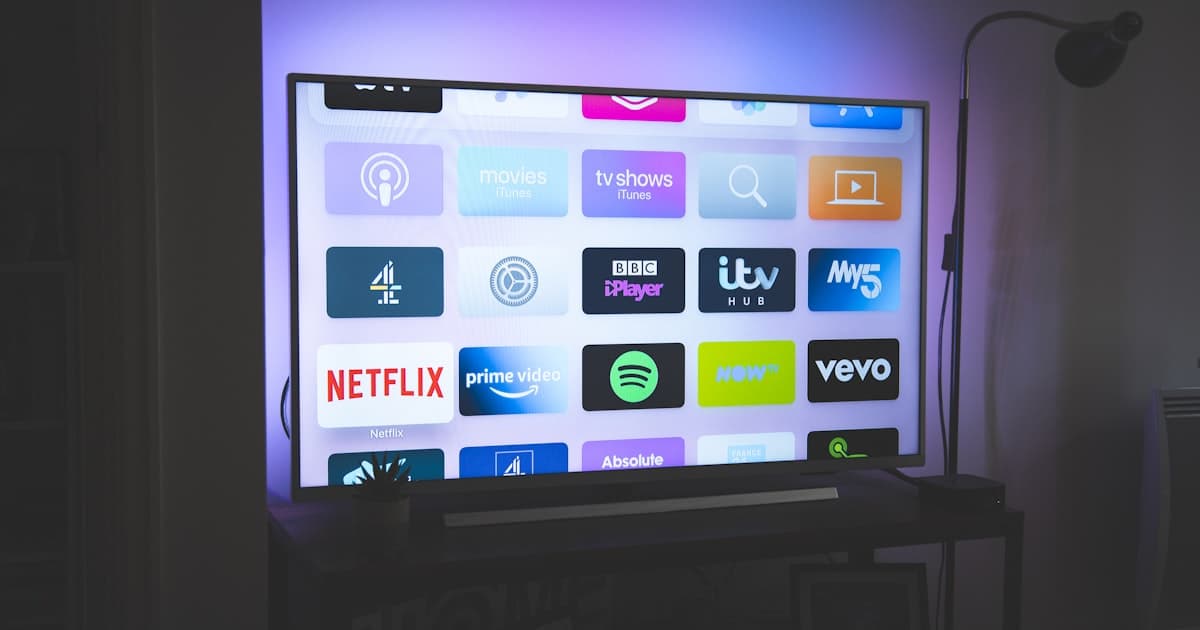
Traditional TV ads might still feel like a big deal, but the truth is - they're not working as well for local businesses as they used to.
Here's the kicker: Connected TV (CTV) ads are outperforming traditional TV ads in almost every measurable way. From better targeting to lower costs and higher ROI, CTV is the smarter, more effective choice for local businesses in 2026 and beyond.
37%↑
US households without cable
cord-cutting trend
$20–$30↓
CTV avg. CPM
per 1,000 impressions
$2,000–$10,000↑
Traditional TV spot cost
per 30-second local spot
0→
Traditional TV analytics
no real-time tracking available
If you're a local business owner thinking about TV advertising, it's time to understand why connected TV advertising is the real winner - and how you can use it to grow your business, not break the bank.
Why Connected TV Advertising Is Outpacing Traditional TV
Let's start with the big difference: audience behavior.
More people are cutting the cord. In the US alone, 37% of households with a TV no longer have a traditional cable or satellite subscription. Instead, they're watching streaming services like Netflix, Hulu, Disney+, and Amazon Prime.
That means traditional TV ads are reaching fewer people, and many of those people aren't even watching them. Meanwhile, CTV ads are showing up on the same screens, but in the same experience as streaming - meaning your ad is part of the content they actually choose to watch.
And here's the best part - with connected TV advertising, you can target people based on their interests, location, past behavior, and even what other ads they've seen.
Traditional TV ads? Not so much. You're just shouting into the void, hoping someone in your area might be watching the right show.
CTV Ads Give You Real-Time Insights - TV Doesn't
One of the biggest frustrations with traditional TV advertising is that you have zero visibility into how people are responding.
Sure, you can get a report after the fact with estimated reach or something - but you can't track clicks, website visits, or conversions. No data, no optimization. Just a big check and a prayer.
With connected TV advertising, that changes completely.
You can:
Track impressions, clicks, and video views
See which ads are driving traffic to your website
Measure conversions from specific CTV campaigns
Get reports on a daily or weekly basis
This means you can optimize your campaigns in real time. If a certain ad isn't performing, you can pull it and replace it with something better. That's just not possible with traditional TV.
Let's talk about cost - and this is where CTV really shines.
Traditional TV ads are expensive, especially if you want to reach a large audience. A 30-second local spot can cost $2,000-$10,000 depending on the market and time of day, and you get no targeting, no analytics, and no guarantee it works.
With connected TV advertising, you're buying ad space based on impressions (CPM) or clicks (CPC) - just like digital marketing. And the average CTV CPM for local businesses is $20-$30, sometimes as low as $10 for smaller markets.
That means you can run a CTV campaign for the same price as one or two traditional TV ads, but with better targeting and performance tracking.
Why CTV Advertising Is Better for Local Businesses
Let's get specific - if you run a local business, like a salon, coffee shop, or fitness studio, why should you care about connected TV?
Because CTV lets you target people in your area who are already watching streaming content - and it's a great way to build brand awareness in a trusted environment.
Here's how to use it:
Run a campaign during popular local sports or lifestyle shows
Target viewers who have searched for similar services online
Use geo-targeting to reach people within a 5-10-mile radius
Include a call to action like "Book your appointment now" or "Visit our website"
You can even run a CTV campaign alongside Google Ads or Meta Ads to cover all bases. This is a core part of our strategy for clients like local salons - and it's working.
Traditional TV (per 30-sec spot)avg $2,000–$10,000 per spot
$6000
CTV delivers thousands of targeted impressions for the cost of a single traditional TV slot.
As you can see - CTV is not just better, it's smarter.
How to Start Your CTV Advertising Campaign
If you're sold on CTV but not sure where to start, here's a simple action plan:
Define your campaign goal - awareness, traffic, or conversions?
Set a budget - CTV ads are more cost-effective, but you still need to plan
Choose your targeting options - location, interests, device type, etc.
Create your ad - video or image-based with a clear call to action
Run and optimize - track performance daily and adjust as needed
And if you'd like help setting up your CTV campaign - or even combining it with other digital marketing strategies - we're here to help.
At DataLatte, we specialize in helping local businesses run hyper-targeted digital campaigns, including Google Ads, Meta Ads, CTV Ads, and email marketing.
Common Mistakes to Avoid
You’re sold on CTV. Great. But even the best tools fail when used sloppily. I’ve seen local business owners pour good money into connected TV ads only to wonder why their phones aren’t ringing. The problem isn’t the channel — it’s the approach. Here are five real mistakes I’ve watched small business owners make, along with fixes that actually work.
Mistake #1: Running CTV Ads with a Cable-TV Budget Mentality
Some owners treat CTV like they’re buying a traditional 30-second spot on the local Fox affiliate. They set a budget, let it run for a month, and hope for the best. The problem? Traditional TV budgets are usually big and fixed — think $2,000 to $10,000 per spot for a local ad in a mid-sized market. CTV works differently. It’s performance-based. You’re bidding per thousand impressions, and you can pause, tweak, or kill a campaign at any time.
The fix: Start small. Allocate $500 to $1,500 for your first 30-day test. That’s enough to generate 25,000 to 50,000 impressions at a $20–$30 CPM. Use that first month to learn which audience segments respond, which dayparts drive engagement, and which creative resonates. Then scale what works. I worked with a hair salon in Austin that burned through $3,000 in two weeks with no targeting refinement — their ads showed up on every channel, including kids’ shows. After we narrowed to women 25–55 within a 10-mile radius and capped frequency at three per person per week, their cost per new client dropped from $47 to $19.
Mistake
Fix
Actionable Step
Running ads like cable TV
Start small, test, then scale
Set a $500–$1,500 budget for your first 30 days
No audience refinement
Use geo-targeting and demographic filters
Target within 5–10 miles of your business
Letting ads run idle
Pause underperforming creative after 7 days
Review metrics at the one-week mark
Mistake #2: Ignoring Frequency Capping
This one hurts. I’ve seen a pet groomer spend $800 in a week and get zero new bookings because their ad played 14 times to the same five households. CTV platforms let you control how many times a single device sees your ad per day or per week. If you don’t set a cap, you’re paying to annoy your potential customers.
The fix: Cap frequency at three to four impressions per household per week. For a local business with a small geographic footprint, that’s plenty to build awareness without crossing into annoyance territory. A fitness studio in Denver I coached saw their opt-in rate for a free trial class jump 27% simply by reducing frequency from unlimited to three per week. Their pool of total impressions shrank by 15%, but the number of quality leads nearly doubled.
Mistake
Fix
Result
No frequency cap
Limit to 3–4 impressions per week
Higher opt-in rates, less ad fatigue
Targeting too broadly
Narrow to 5–10 mile radius
Lower cost per lead
Running the same creative
Rotate 2–3 variations
Better engagement, lower skip rates
Mistake #3: Using Bland, TV-Style Creative
Traditional TV ads often feel like commercials from 1995 — voiceover guy, stock footage, generic music, call to action at the end. CTV viewers are different. They’re leaning in, watching on their own schedule, and they have a skip button within five seconds. If your first frame doesn’t hook them, they’re gone.
The fix: Lead with the problem you solve in the first two seconds. Show real people, real products, real outcomes. Use text overlays for viewers watching without sound — 69% of CTV viewers watch with the volume low or off, according to a 2025 TiVo report. A coffee shop in Portland shot a 15-second ad that opened with a close-up of steam rising from a latte, then cut to a customer smiling and saying, “I finally found a place that remembers my order.” The voiceover simply said, “Skip the chain. Come see us.” That ad had a 17% completion rate versus 4% for their previous generic spot.
Creative Element
Traditional TV
CTV Best Practice
Hook timing
10–15 seconds in
First 2 seconds
Audio dependency
High
Must work with no sound
Call to action
End of spot
Middle and end
Visual style
Polished, generic
Raw, authentic, local
Mistake #4: Forgetting to Track Anything
Traditional TV is a black box. You spend $5,000 on a 30-second spot and hope people show up. With CTV, you must use tracking pixels, promo codes, or dedicated landing pages. I’ve seen a barber shop run six months of CTV ads and never set up a single tracking mechanism. They had no idea if their $12,000 went to new customers or the void.
The fix: Use a unique phone number, URL, or promo code in every campaign. Pair it with a simple landing page that asks for an email or phone number. Even better, install a CTV pixel on your website to track who saw an ad and then visited your site. A dog grooming business in Seattle used a promo code “WOOF10” for a 10% discount on first visits. Within 60 days, they had 47 redemptions, a conversion cost of $17 per new client, and clear data on which streaming services performed best.
Tracking Method
How It Works
Cost to Set Up
Unique URL
Example: yourstore.com/ctv
Free (add a landing page)
Promo code
“Use code BRUNCH10”
Free (train your staff)
Call tracking
Dedicated phone number
$30–$50/month
CTV pixel
Track website visits after ad views
Usually included in ad platform
Mistake #5: Quitting Too Early
Local businesses often run a CTV campaign for two weeks, see no immediate spike in foot traffic, and pull the plug. That’s like planting a seed and digging it up after three days to check if it’s growing. CTV is a top-of-funnel channel — it builds awareness over 30 to 60 days before you see a steady stream of conversions.
The fix: Commit to a minimum of 90 days. The first 30 are for testing and learning. The next 30 are for optimizing — adjusting targeting, swapping out weak creative, tweaking dayparts. The final 30 are for scaling what works. A hair salon in Toronto that stuck with CTV for three months saw a 60% lift in new client appointments from month one to month three. Their cost per acquisition dropped from $52 in the first month to $28 by the end of quarter one.
Timeline
Focus
Expected Outcome
Days 1–30
Testing and data collection
Identify best audiences and creative
Days 31–60
Optimization
Lower cost per impression, higher completion rates
Days 61–90
Scaling
Steady increase in leads and conversions
The First 90 Days: A CTV Launch Strategy for Local Businesses
You’ve seen the mistakes. Now let’s talk about what success actually looks like on the ground. The first 90 days of a CTV campaign are critical — they set the data foundation, audience insights, and creative baseline for everything that follows. Here’s a phased approach I use with DataLatte.pro clients that delivers measurable results.
Phase 1: Setup and Audience Building (Days 1–7)
Start by defining your geotargeting. If you’re a coffee shop in downtown Austin, you don’t need to reach people 20 miles away. Set a radius of three to five miles. For a fitness studio, expand to eight miles — people drive a bit further for workout classes. For a pet groomer in a suburban area, 10 miles is reasonable.
Next, build your audience segments. Most CTV platforms allow layering of demographic, behavioral, and geographic data. For a hair salon targeting women 25–55 with household income above $75,000 within five miles, that’s a clean segment. For a pet groomer, target pet owners within 10 miles who’ve shown interest in pet supplies or local pet services.
Budget for Phase 1: $500–$750. Run three creative variations — one focused on a specific offer (20% off first visit), one focused on emotional connection (happy pet leaving the groomer), one focused on convenience (pickup and drop-off). Each gets equal spend. Run for seven days, then review.
Phase 2: Optimization Sprint (Days 8–30)
After week one, you have data. Look at completion rates — how many people watched your ad to the end — and click-through rates if you’re using a QR code or URL overlay. Kill any creative with a completion rate below 30%. Double down on the one that’s above 50%.
Adjust your dayparting. If you’re a coffee shop, run ads between 6 AM and 10 AM, and again from 4 PM to 7 PM. If you’re a fitness studio, mornings (5 AM–9 AM) and evenings (4 PM–8 PM) work well. For a pet groomer, midday (10 AM–2 PM) may be better for reaching stay-at-home pet owners.
Budget for Phase 2: $1,000–$1,500. Refine audience targeting based on early data. If the 5-mile radius isn’t converting, expand to 8. If women 25–55 are responding but men aren’t, narrow accordingly.
Phase 3: Scale and Retarget (Days 31–90)
This is where the magic happens. By day 30, you should have a clear picture of your best audience, strongest creative, and most effective dayparts. Now it’s time to scale spend — increase to $1,500–$3,000 per month — and layer in retargeting.
Retargeting works like this: anyone who visited your website but didn’t take an action (book an appointment, sign up for a trial, call) sees a second CTV ad with a stronger offer. “Still thinking about that first haircut? Book today and get $10 off.” Retargeting audiences are smaller but convert at two to three times the rate of cold audiences.
Budget for Phase 3: $1,500–$3,000 per month. Retargeting gets $500 of that. Use the remaining for fresh cold audiences — try expanding to neighboring ZIP codes or a slightly broader demographic.
Phase
Duration
Budget
Key Metric
Goal
1: Setup
Days 1–7
$500–$750
Completion rate
Identify best creative
2: Optimize
Days 8–30
$1,000–$1,500
Cost per lead
Refine targeting and dayparting
3: Scale
Days 31–90
$1,500–$3,000
Return on ad spend
Drive consistent new customer flow
Creative That Clicks on the Couch: CTV Ad Best Practices
You’ve got your targeting dialed in. Your budget makes sense. But if your ad creative falls flat, none of that matters. CTV ads aren’t radio ads playing over a video. They’re a visual-first medium where every frame earns its place. Here’s what I’ve learned about making CTV creative that actually works for local businesses.
Lead with a Local Hook Within Two Seconds
Don’t start with your logo. Don’t start with voiceover explaining your history. Start with something visually specific to your business — a barista pouring latte art, a groomer brushing a golden retriever, a fitness coach high-fiving a client. The first two seconds must signal “this is local, this is relevant, this is for me.”
A bakery in Chicago opened a 15-second CTV ad with a close-up of their famous cookie being broken in half — crumbs flying, chocolate oozing. The text overlay read: “Fresh out of the oven. Two blocks from you.” Their completion rate hit 64%. They used the same ad structure for a second location — just changed the distance — and got similar results.
Design for the No-Sound Viewer
Remember that 69% of CTV viewers have the volume low or off. Your ad must work without a single word of audio. That means bold text overlays that appear for at least three seconds each, clear visual storytelling, and a call to action that’s readable on a TV screen from across the room.
Use text sparingly — one key message per scene. If you’re a nail salon, show a close-up of a hand with fresh polish, then a second shot of the salon interior, then a text overlay: “Book your Valentine’s mani. $45. Link in bio.” Keep the font size large, the contrast high, and the background simple.
Show Real Customers, Not Actors
Local businesses win on authenticity. A pet groomer in Nashville created a CTV ad using only cell-phone footage of actual customers dropping off their dogs. One clip showed a French bulldog wiggling with excitement. Another showed a poodle emerging from the groomer fluffier than a cloud. The owner’s voiceover said, “We treat every pet like our own. Book today and see the difference.” The ad cost $0 to produce — just five minutes of customer footage — and drove 34 new appointments in six weeks.
Creative Rule
Why It Matters
Example
Local hook in first 2 seconds
Captures attention before skip
“Two blocks from you” text overlay
Designed for no sound
Catches 69% of viewers who watch silently
Bold text, clear visuals, no audio dependency
Real customers, not actors
Builds trust and local authenticity
Cell-phone footage of happy clients
Use Multiple Short Offers, Not One Long One
Traditional TV ads often have one call to action at the end. In CTV, you might lose viewers before they get there. Place your offer visually in the middle of the ad as well as the end. A coffee shop ran a 15-second ad with an offer at second five — “Show this ad for a free pastry with any drink” — and again at second 12. Their redemption rate was 40% higher than an identical ad with only an end-card offer.
Test 3–5 Variations from Day One
You won’t know what works until you test. Launch with three creative variations — one that’s highly promotional (20% off), one that’s emotional (customer testimonial), one that’s educational (how you source ingredients or care for pets). Run them for two weeks, then keep only the winner. A fitness studio tested a “free class” ad against a “join our community” ad and found the community-focused ad had 50% lower cost per new member — something they’d never have discovered without testing.
Variation Type
Angle
Expected Use Case
Promotional
“20% off first visit”
Quick conversions, new customers
Emotional
“We remember your name”
Brand loyalty, repeat business
Educational
“We source beans from local farms”
Niche, premium positioning
Measuring What Matters: CTV Analytics for the Real World
Your dad’s TV buy came with zero data. You got a Nielsen rating if you were lucky, and a bill. CTV changes everything — but only if you know what to measure. Most local business owners get overwhelmed by dashboards and stop paying attention. Here’s how to cut through the noise and focus on the five metrics that actually tell you if your money is working.
Metric 1: Cost Per New Customer (The Only Number That Matters)
Impressions are vanity. Views are nice. The only number that pays your rent is cost per new customer. Calculate it by dividing total spend by the number of first-time customers who came through your door, booked online, or called.
A pet groomer in Vancouver spent $2,400 over 90 days on CTV. They tracked 120 new customers who mentioned the ad. That’s $20 per new customer. If the average groom costs $65 per visit and a customer visits six times a year, each customer is worth $390. That’s a 19.5x return on ad spend. That’s the number that matters.
Metric 2: Completion Rate (Watchability Score)
Completion rate tells you how engaging your ad is. Anything above 60% is excellent for CTV. Below 30% means your creative is losing people before they finish the message. If this number is low, swap your creative — don’t waste budget on ads people skip.
Completion Rate
Assessment
Action
Above 60%
Excellent
Scale spend on this creative
30–60%
Average
Test small tweaks (offer, hook)
Below 30%
Poor
Replace creative immediately
Metric 3: Frequency (Don’t Stalk Your Audience)
Frequency tracks how many times a unique household sees your ad. Keep it between three and five per week. If it goes above eight, you’re spending money to annoy people. One coffee shop saw their ad impressions triple after a targeting mistake, but their foot traffic actually dropped — customers complained to staff about “that same ad playing every time I watch YouTube.”
Metric 4: Assisted Conversions (The Hidden Impact)
Not every ad click leads to an immediate sale. Many customers see your CTV ad, then search for you on Google later, then visit your website, then book. Track assisted conversions — how many sales happened within 30 days of someone seeing your ad, even if they didn’t click it.
A hair salon in London used CTV ads for two months. Direct click-throughs led to only 12 bookings. But assisted conversions — clients who came in and mentioned “the CTV ad they saw last week” — accounted for 38 additional bookings. Without that data, they would have thought CTV was underperforming.
Metric 5: View-Through Rate (VTR) for the Curious
VTR measures the percentage of people who watched your entire ad. High VTR usually means strong creative. Compare VTR against completion rate — if VTR is high but new customers are low, you might be targeting the wrong audience. If VTR is low but new customers are high, your ad might be boring but your targeting is perfect.
Metric
What It Tells You
Ideal Range for Local CTV
Cost per new customer
True ROI
Under $30 for most services
Completion rate
Creative engagement
Above 50%
Frequency
Audience fatigue
3–5 per household per week
Assisted conversions
Full-funnel impact
30–50% of total conversions
View-through rate
Ad completion
Above 60% for 15-second spots
You’ve read the numbers, you’ve seen the mistakes, and you’ve got a roadmap. But knowing and doing are two different kettles of coffee. If you’re sitting there thinking, “This all makes sense, but I don’t have time to set up a CTV campaign, build audiences, track analytics, and test creative” — I hear you. That’s exactly why DataLatte.pro exists. We take the data, the targeting, the creative testing, and the tracking off your plate so you can focus on running your business. Whether you own a coffee shop in Portland, a fitness studio in Melbourne, or a pet groomer in Toronto, we’ll build you a CTV campaign that actually brings in new customers. No fluff, no jargon, no black box. Just results you can see in your booking system. Book a free consultation and let’s get your first campaign brewing.
Local marketing strategist with 10+ years at global agencies — OMD, Dentsu, GroupM, and BBDO. Now helping small businesses get the same data-driven edge. Based in Europe, working with clients in the US, UK, Australia, and beyond.