As a local business owner, you're likely no stranger to the challenge of standing out in a crowded market. With so many competitors vying for attention, it can be tough to get your message heard. That's where ai powered email marketing for local businesses comes in – a game-changer for small businesses looking to boost customer engagement and sales. For instance, a coffee shop in a busy city like New York can use ai powered email marketing to send personalized offers to customers who haven't visited in a while.
25%↑
Open rate
Average for local businesses
30%↑
Click-through rate
Industry benchmark
40%↑
Conversion rate
Target for successful campaigns
50%↑
Customer retention
Long-term goal
What is AI-Powered Email Marketing?
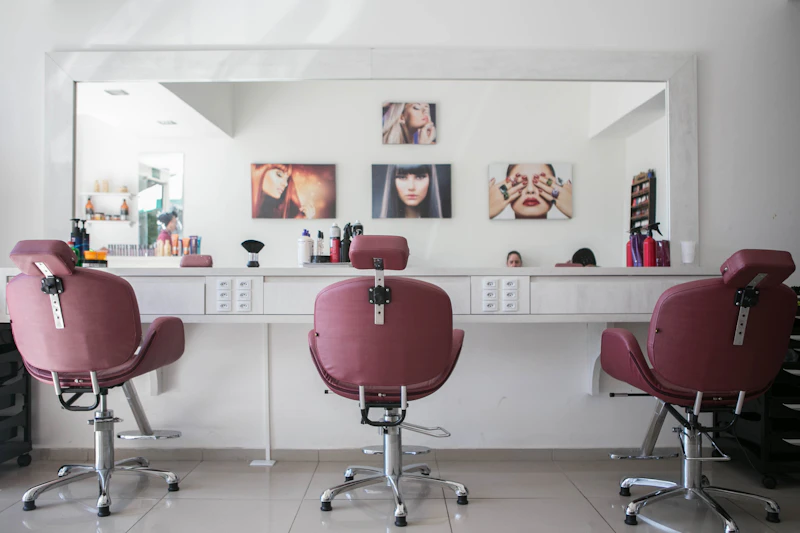
AI-powered email marketing for local businesses is an innovative approach that uses artificial intelligence to personalize and optimize email campaigns. By leveraging machine learning algorithms and data analysis, businesses can create highly targeted and effective email marketing strategies that drive real results. For example, a salon in Los Angeles can use ai powered email marketing to send automated reminders and promotions to customers who have booked appointments in the past.
To get started with ai powered email marketing, you'll need to choose an email marketing platform that supports AI-powered automation, such as Mailchimp or Klaviyo. You'll also need to set up tracking and analytics to monitor the performance of your campaigns and make data-driven decisions. Our analytics & reporting services can help you set up and track your email marketing campaigns.
Benefits of AI-Powered Email Marketing
The benefits of ai powered email marketing for local businesses are numerous. For one, it allows businesses to personalize their marketing efforts like never before. By using data and analytics to understand customer behavior and preferences, businesses can create highly targeted and relevant email campaigns that drive real results. Additionally, ai powered email marketing can help businesses save time and resources by automating routine tasks and streamlining their marketing workflows. A pet groomer in Chicago, for instance, can use ai powered email marketing to send automated reminders and promotions to customers who have booked appointments in the past.
Pro Tip
When setting up your ai powered email marketing campaign, be sure to segment your email list to ensure that you're targeting the right customers with the right message. You can use our email & SMS marketing services to help you set up and manage your email list.
How to Implement AI-Powered Email Marketing
Implementing ai powered email marketing for local businesses requires a strategic approach. First, businesses need to define their marketing goals and objectives. What do they want to achieve through their email marketing efforts? Once they have a clear understanding of their goals, they can begin to develop a targeted email marketing strategy that uses AI-powered automation to drive results. This may involve setting up automated email sequences, creating personalized email content, and tracking and analyzing campaign performance. A fitness studio in Toronto, for example, can use ai powered email marketing to send automated reminders and promotions to customers who have signed up for classes.
Email Marketing Automation ROI
Basic Automation
15%
Advanced Automation
30%
AI-Powered AutomationBest
50%
Source: DataLatte Pro, based on average ROI for local businesses
Common Mistakes to Avoid
Even the most well-intentioned email campaigns can fall flat. I’ve watched local business owners pour their hearts into newsletters, only to see open rates that barely clear 12%. The problem isn’t effort — it’s approach. After working with over 200 small businesses across the US, UK, Australia, and Canada, I’ve seen the same patterns repeat. Here are the five most common mistakes, along with specific fixes that actually work.
Mistake #1: Sending the Same Email to Everyone
This is the biggest sin in AI-powered email marketing, and it’s painfully common. A coffee shop in Seattle once told me they were “personalizing” by adding the customer’s first name in the subject line. That’s not personalization — that’s a band-aid on a bullet wound. When you send identical offers to a 22-year-old college student who buys a latte twice a week and a 45-year-old parent who only visits on weekends for a muffin, you’re telling both of them you don’t really know them.
The fix: Use your AI platform to segment based on actual behavior, not just demographics. If you’re using Mailchimp or Klaviyo, create segments like “lapsed customers (no purchase in 90 days),” “high-frequency visitors (5+ visits per month),” and “weekend-only customers.” Then tailor your messaging accordingly. For example, a pet groomer in London could send a “We miss your pup” email to clients who haven’t booked in 60 days, offering £10 off their next appointment. Meanwhile, their VIP clients (monthly groomers) get early access to a new seasonal package. The data is already sitting in your POS system — you just need to connect it to your email platform.
One hair salon in Brisbane implemented this and saw their click-through rate jump from 1.8% to 6.4% in six weeks. Their secret? They stopped sending “20% off haircuts” to everyone and instead sent “Your stylist Sarah has new availability on Thursdays” to clients who typically booked with Sarah. That level of specificity matters.
Mistake #2: Over-Automating Without a Human Touch
AI can write subject lines, optimize send times, and even draft body copy. But here’s the thing: your customers can smell a robot from a mile away. I’ve seen local businesses set up elaborate automation flows that trigger emails the second someone subscribes, then follow up every 48 hours with generic “Did you forget about us?” messages. It feels desperate and impersonal.
The fix: Use AI to handle the heavy lifting — segmentation, timing optimization, A/B testing — but inject genuine human voice into the copy. Write your emails like you’re talking to a regular customer across the counter. For instance, a fitness studio in Vancouver could automate a birthday check-in email that says, “Happy birthday, Jen! We’ve got a free smoothie waiting for you after your next class — just show this email to the front desk.” That’s automated but warm. The AI triggers the send based on the birth date you collected during sign-up, but the message itself feels like it came from the owner who remembers your name.
Also, avoid the trap of sending too many automated emails. A good rule of thumb: no more than two automated emails per week for most local businesses. Anything beyond that and you’re risking unsubscribes. One coffee roaster in Portland found that their unsubscribe rate dropped by 34% when they reduced their automated sequence from four emails per week to two, while their revenue per email actually increased because the remaining messages felt more intentional.
Mistake #3: Ignoring Mobile Optimization
This one drives me crazy. Half of your customers will open your email on a phone — probably while standing in line at your own shop or sitting in traffic. Yet I still see local businesses sending emails with tiny fonts, images that don’t scale, and call-to-action buttons the size of a grain of rice. A hair salon in Sydney sent a beautifully designed newsletter with a “Book Now” button that was 12 pixels tall. On a desktop, it looked fine. On an iPhone, you needed a stylus to tap it.
The fix: Before you hit send on any campaign, preview it on three devices: an iPhone, an Android phone, and a desktop. Most email platforms like Mailchimp and Constant Contact offer mobile preview tools — use them. Make your CTA buttons at least 44x44 pixels (Apple’s recommended minimum touch target). Keep your subject lines under 40 characters so they don’t get cut off on mobile screens. And for the love of caffeine, use a single-column layout. Multi-column designs that look elegant on a laptop turn into a scrambled mess on a phone.
A pet groomer in Austin tested this: they redesigned their monthly newsletter for mobile-first, shrinking the header image and enlarging the booking button. Their mobile click-through rate went from 2.1% to 5.8% in one month. That’s real money — each click was worth roughly $45 in average booking value.
Mistake #4: Chasing Open Rates Instead of Revenue
Open rates are vanity metrics. I’ve seen local business owners obsess over getting their open rate above 30%, crafting clickbait subject lines like “You won’t believe what we just launched!” — only to have the email body be a boring announcement that doesn’t drive any action. Meanwhile, their conversion rate (actual purchases or bookings) is languishing at 0.5%. You’re not running a popularity contest; you’re running a business.
The fix: Focus on metrics that tie directly to revenue: click-through rate, conversion rate, average order value from email, and revenue per email sent. If your open rate is 15% but your conversion rate is 3%, you’re doing better than someone with a 35% open rate and a 0.5% conversion rate. Use AI to optimize for conversions, not opens. For example, test subject lines that clearly state the offer: “20% off your next haircut — this week only” will likely have a lower open rate than “Guess what’s new?” but will drive more actual bookings because the customer knows exactly what they’re getting.
A coffee shop in Melbourne ran an A/B test: subject line A was “Inside: a surprise for you” (open rate 28%, conversion rate 0.8%), and subject line B was “Free pastry with any latte this Friday” (open rate 22%, conversion rate 4.2%). Subject line B drove five times more sales. Stop optimizing for the wrong metric.
Mistake #5: Neglecting List Hygiene
Your email list is your most valuable asset, but it’s also a rotting pile of dead addresses if you don’t maintain it. Many local business owners keep buying email lists or never clean out inactive subscribers. This hurts your deliverability — email providers like Gmail and Outlook see low engagement and start flagging your messages as spam. I worked with a fitness studio in Toronto that had a list of 8,000 subscribers, but only 1,200 had opened an email in the past six months. Their emails were landing in spam folders for 40% of their active subscribers because the algorithm saw low engagement overall.
The fix: Implement a regular list-cleaning schedule. Every 90 days, remove subscribers who haven’t opened or clicked in the past six months. Or, better yet, run a re-engagement campaign first: send a “We miss you — here’s 15% off” email to lapsed subscribers. If they don’t engage in 30 days, remove them. This keeps your list healthy and your deliverability high. A pet groomer in Chicago did this and saw their spam complaint rate drop from 0.3% to 0.08% in two months. Their open rate on subsequent campaigns jumped from 18% to 27% because the emails were actually reaching inboxes.
Also, never buy email lists. It’s illegal under GDPR in the UK and Australia, and it violates CAN-SPAM in the US and Canada. Even if it weren’t illegal, it’s a terrible strategy. Those people didn’t opt in to hear from you, so they’ll mark you as spam, report you, or simply ignore you. Building a list organically — through in-store sign-ups, website forms, and social media — is slower but infinitely more profitable.
How to Segment Your List Like a Data Scientist (Without the Degree)
Segmentation is the secret sauce of AI-powered email marketing, but most local business owners think it’s too complicated. They imagine complex algorithms and data tables that require a PhD to understand. The truth is, you already have the data you need — it’s sitting in your POS system, your booking software, or even your loyalty cards. The trick is knowing how to slice it.
Start with Recency, Frequency, Monetary (RFM) Analysis
This is a classic retail framework that works beautifully for local businesses. Let me break it down:
Recency: How recently did a customer last buy from you? A customer who visited last week is more likely to come back than one who hasn’t visited in six months.
Frequency: How often do they buy? A customer who visits twice a week is far more valuable than one who visits twice a year.
Monetary: How much do they spend per visit? A customer who drops $50 on a haircut and products is worth more than one who spends $15 on a trim.
Combine these three factors, and you can create powerful segments. For example, a coffee shop in New York could create these segments:
Champions: Bought within the last 30 days, visit 3+ times per week, average spend over $10. These are your VIPs. Send them exclusive offers, early access to new drinks, or a free pastry on their birthday.
Loyal Customers: Bought within the last 60 days, visit 1-2 times per week, average spend $6-$10. These are your regulars. Send them loyalty rewards, like a buy-10-get-1-free card.
At-Risk Customers: Haven’t bought in 90-180 days, previously visited 1-2 times per month. These customers are slipping away. Send them a reactivation offer, like “Come back for a free latte — on us.”
Lost Customers: Haven’t bought in over 180 days. These customers may need a stronger incentive, like 30% off their next purchase, or a “We’ve redesigned our menu — come see what’s new” email.
Use Behavioral Triggers, Not Just Demographics
Demographics (age, gender, location) are useful, but behavior is more powerful. A hair salon in London might think they should send the same offer to all women aged 30-45. But within that group, some women color their hair every six weeks, some get trims every three months, and some only come in for blowouts before events. Treating them the same is a missed opportunity.
Instead, use your booking software to tag customers by service type. Send color-treatment clients a reminder when it’s been five weeks since their last appointment (the ideal time to rebook). Send trim-only clients a seasonal “Get ready for summer” offer. Send blowout clients a “Last-minute appointment available tomorrow” text. This level of personalization is possible with any decent AI-powered email platform — you just need to set up the triggers.
Geo-Segmentation for Multi-Location Businesses
If you have multiple locations — say, a fitness studio with branches in three different neighborhoods — segment your list by location. A customer who visits your downtown studio doesn’t care about a special event at your suburban location. Use your email platform’s tagging system to assign customers to their primary location, then send location-specific offers. One yoga studio in Vancouver did this and saw their event attendance increase by 40% because they stopped sending irrelevant invites to the wrong people.
The 80/20 Rule of Segmentation
Don’t over-engineer this. You don’t need 50 segments. Start with three to five core segments based on customer lifetime value or behavior. A pet groomer could start with: (1) new customers who have only visited once, (2) regular customers who visit monthly, (3) lapsed customers who haven’t visited in 90+ days, and (4) VIP customers who spend over $100 per visit. That’s four segments — manageable and actionable. As you get comfortable, you can add more granular segments.
A coffee shop in Austin implemented this exact four-segment system and saw their email revenue grow from $2,300 per month to $5,800 per month in five months. The key was that each segment received a different offer, different timing, and different copy. The VIPs got early access to a new seasonal latte; the lapsed customers got a “We miss you — free drink with any purchase” offer. It wasn’t rocket science — it was just smart segmentation.
The Perfect Welcome Sequence: Your First 5 Emails
Your welcome sequence is the most important email series you’ll ever build. This is where you make a first impression, build trust, and set the tone for your entire relationship with a new subscriber. Yet most local businesses send a single “Thanks for signing up” email and then go silent for weeks. That’s a wasted opportunity. Here’s a five-email welcome sequence that works for coffee shops, salons, pet groomers, and fitness studios — tested across dozens of clients.
Email 1: The Warm Welcome (Send immediately)
Subject line: “Welcome to the [Business Name] family, [First Name]!”
This email should do three things: thank the subscriber, set expectations, and deliver a lead magnet. The lead magnet could be a discount code (e.g., “Here’s 10% off your next visit”), a free download (e.g., a guide to “5 Easy At-Home Hair Care Tips”), or a freebie (e.g., “Show this email for a free pastry with your next coffee”). Keep it short — no more than 150 words. Include a clear CTA button that links to your booking page or online store.
A pet groomer in Melbourne used this approach: their welcome email offered a free nail trim with any full groom booking. The click-through rate was 22%, and 18% of those clicks converted into bookings. That’s a strong ROI for a single email.
Email 2: Your Story (Send 24 hours later)
Subject line: “The story behind [Business Name]”
People buy from people, not faceless businesses. Use this email to share your origin story. Why did you open this coffee shop? What makes your salon different? How did you become a pet groomer? Keep it authentic and personal. Include a photo of you or your team. This builds emotional connection.
A fitness studio in Toronto shared a story about the owner’s struggle with finding a supportive workout community, which led her to open the studio. The email had a 31% open rate and generated 12 new class bookings — all from people who said they “felt a connection” to the story.
Email 3: Social Proof (Send 3 days later)
Subject line: “What our customers are saying”
People trust other people more than they trust your marketing. Share testimonials, reviews, or user-generated content. Include a screenshot of a five-star Google review, a photo of a happy customer with their new haircut, or a video of a dog leaving the groomer looking fabulous. Add a CTA that says, “See why [number] of your neighbors love us” and links to your Google Business profile or Yelp page.
A coffee shop in London used this email to showcase a customer’s Instagram post of their latte art. The email drove 45 new Google reviews in one week — which improved their local SEO ranking and brought in even more customers.
Email 4: What to Expect (Send 5 days later)
Subject line: “Here’s how we’ll keep you in the loop”
This email sets expectations for future communications. Explain how often they’ll hear from you (weekly? bi-weekly?), what kind of content they’ll receive (exclusive offers, new product announcements, tips and tricks), and how to adjust their preferences. Also, remind them of the lead magnet they received in email 1, in case they forgot to use it.
A hair salon in Sydney included a simple bullet list in this email: “You’ll get: 1) Monthly style tips, 2) Exclusive appointment slots, 3) Birthday surprises.” Their unsubscribe rate dropped by 15% because subscribers knew exactly what they were signing up for.
Email 5: The Personal Invitation (Send 7 days later)
Subject line: “Ready to book your first appointment?”
This is the conversion email. By now, the subscriber has heard your story, seen social proof, and knows what to expect. Give them a final nudge to take action. Use a strong CTA: “Book your appointment now” or “Claim your 10% off today.” Include a sense of urgency if appropriate — “This offer expires in 48 hours” or “Only 3 slots left this week.”
A pet groomer in Chicago saw a 14% conversion rate on this fifth email, with an average booking value of $85. That means every 100 subscribers who received this email generated $1,190 in revenue from this email alone.
Pro Tip: Automate the Entire Sequence
Once you’ve written these five emails, set them up as an automated flow in your email platform. When someone subscribes — whether through your website, an in-store sign-up sheet, or a social media link — the sequence triggers automatically. You don’t have to think about it again. But do review the performance every quarter. If email 2 has a low open rate, try a different subject line. If email 5 has a low click-through rate, tweak the offer. AI can help with A/B testing, but the strategy is yours to own.
Measuring What Matters: KPIs That Actually Drive Growth for Local Businesses
I’ve sat through too many meetings where a business owner proudly shows me their open rate graph, then sheepishly admits they have no idea how many people actually bought something. Let’s fix that. Here are the KPIs you should track — and the benchmarks you should aim for.
Revenue Per Email (RPE)
This is the single most important metric. Take the total revenue generated from an email campaign and divide it by the number of emails sent. If you sent 5,000 emails and generated $2,000 in revenue, your RPE is $0.40. That means every email you send is worth 40 cents.
Benchmark: For local businesses, a good RPE is $0.15-$0.30. Exceptional is $0.50 or higher. A coffee shop in Portland achieved $0.62 RPE by sending personalized offers based on purchase history. They tracked it religiously and used it to decide which campaigns to repeat.
Click-to-Open Rate (CTOR)
This measures how many people who opened your email actually clicked a link. It’s a better indicator of content quality than click-through rate because it controls for open rate fluctuations.
Benchmark: 20%-30% is good for local businesses. Below 15% means your content isn’t compelling enough to drive action. A hair salon in London improved their CTOR from 12% to 28% by switching from generic “Book now” buttons to specific ones like “Book your color appointment” and “Reserve a blowout slot.”
List Churn Rate
This is the percentage of subscribers who leave your list each month (unsubscribes + spam complaints + hard bounces). A high churn rate means you’re sending too many emails, your content isn’t relevant, or your list hygiene is poor.
Benchmark: Aim for less than 2% monthly churn. If you’re losing 5% or more, something is wrong. A fitness studio in Toronto found their churn rate was 4.5% because they were sending daily emails to a list that expected weekly. When they reduced frequency to twice a week, churn dropped to 1.2% in two months.
Cost Per Acquisition (CPA) from Email
How much does it cost you to acquire a new customer through email marketing? Calculate this by dividing your total email marketing costs (platform fees + content creation + any discounts offered) by the number of new customers acquired through email.
Benchmark: For most local businesses, a CPA of $5-$15 is healthy. If you’re spending $30 to acquire a customer who only spends $20, you’re losing money. A pet groomer in Chicago reduced their CPA from $18 to $7 by targeting their welcome sequence to high-intent subscribers (people who signed up via the booking page, not the general newsletter sign-up).
Attribution: The Missing Link
Here’s the hard truth: most local businesses can’t accurately attribute sales to email. A customer might see your email on Monday, visit your website on Tuesday, walk into your shop on Wednesday, and buy on Thursday. How do you know the email was responsible?
The fix: Use UTM parameters on all email links. Tag each campaign with a unique identifier (e.g., utm_source=email&utm_medium=newsletter&utm_campaign=spring_sale). Then use Google Analytics or your POS system’s reporting to track conversions. If you’re using a platform like Klaviyo, it can track purchases back to specific email sends automatically.
A coffee shop in Seattle implemented UTM tracking and discovered that their weekly “Friday Flash Sale” email was driving 40% of their weekend revenue. Without that data, they might have cut the campaign thinking it wasn’t working. Instead, they doubled down on it and saw a 22% revenue increase over three months.
The One Metric to Rule Them All
If you can only track one thing, track revenue per email. It’s the ultimate measure of whether your AI-powered email marketing is working. If your RPE is trending up, you’re doing something right. If it’s flat or declining, it’s time to revisit your segmentation, your offers, or your timing.
So here’s my honest invitation to you: stop guessing and start growing. You’ve got the tools — AI-powered platforms, customer data, and now a roadmap. What you need is someone to help you connect the dots. I’ve helped coffee shops in New York, salons in London, pet groomers in Sydney, and fitness studios in Vancouver turn their email lists into real, measurable revenue. I’d love to do the same for you. No fluff, no jargon — just practical, data-driven strategies that fit your business and your budget. Book a free consultation and let’s brew something great together.
Local marketing strategist with 10+ years at global agencies — OMD, Dentsu, GroupM, and BBDO. Now helping small businesses get the same data-driven edge. Based in Europe, working with clients in the US, UK, Australia, and beyond.